

Contact information
Free service hotline
net04@gtggroup.com
TEL: 0769-85075888-6618
13925591357
Fax: 0769-85075898
Mail: net04@gtggroup.com
ADD: Huacan Industrial Park, No. 2 Keji 8th Road, Songshan Lake Park, Dongguan City, Guangdong Province
What Products Fall Under ITAV EMC Testing?
Electromagnetic Compatibility (EMC) testing is a regulatory prerequisite for Information Technology and Audio/Video (ITAV) products entering global markets. This guide walks through the key standards, test categories, and practical steps involved in getting ITAV products through EMC compliance — from initial planning through to final report issuance.
What Products Fall Under ITAV EMC Testing?
The ITAV category spans a broad range of electronic devices. Information Technology Equipment (ITE) includes desktop computers, laptops, servers, printers, monitors, networking gear such as routers and switches, and peripherals like keyboards and mice. Audio/Video (AV) Equipment covers projectors, speakers, amplifiers, set-top boxes, digital cameras, and streaming devices.
A critical distinction in EMC testing is between Class A and Class B equipment. Class B devices, intended for residential use, face stricter radiated emission limits than Class A (commercial/industrial) devices. Misclassifying a product can invalidate an entire test run and require resubmission.
Products with integrated wireless modules — such as Wi-Fi-enabled speakers or Bluetooth peripherals — carry additional EMC requirements beyond the base ITAV standards. Identifying these at the outset prevents scope changes mid-project.
Core Standards for ITAV EMC Compliance
The applicable standards depend on the target market, but the international framework is largely harmonized:
- CISPR 32 (EN 55032) — Electromagnetic emissions from multimedia equipment. This is the primary emission standard for ITAV products globally.
- CISPR 35 (EN 55035) — Immunity requirements for multimedia equipment. Covers ESD, radiated immunity, surge, and other disturbance tests.
- FCC Part 15 Subpart B — Applicable in the United States for unintentional radiators. Testing methodology follows ANSI C63.4/C63.10.
- GB/T 9254 (China) — Equivalent to CISPR 32, used for domestic compliance in the Chinese market alongside GB/T 9254.2 for immunity.
Version transitions matter. When a standard is revised, there is typically a transition period during which either the old or new version may be used. After the transition ends, all new applications must comply with the latest edition. Monitoring these timelines is part of ongoing compliance management.
Emission vs. Immunity — Two Sides of EMC
Emission Testing
Emission tests measure the electromagnetic disturbance generated by a device during normal operation. The goal is to confirm that these disturbances remain within the limits defined by the applicable standard. The two primary categories are:
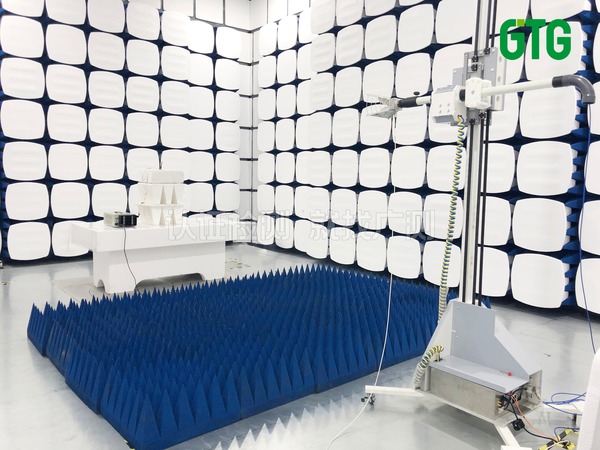
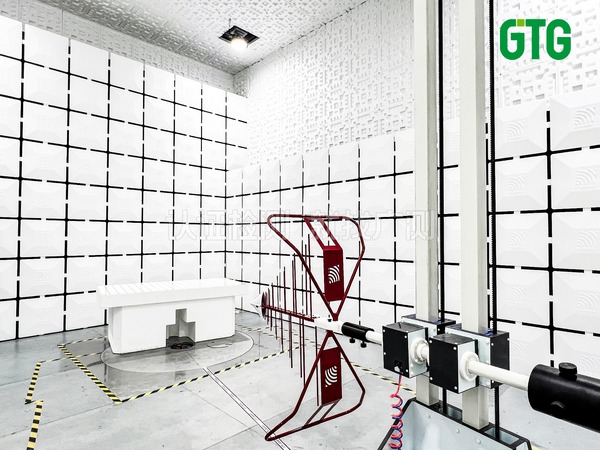
- Radiated Emission — Measures electromagnetic energy emitted through space, typically from 30 MHz up to 1 GHz (or higher for certain standards). Performed in a semi-anechoic or fully anechoic chamber.
- Conducted Emission — Measures disturbance coupled onto AC or DC power lines, typically from 150 kHz to 30 MHz. Uses a Line Impedance Stabilization Network (LISN) for measurement.
Immunity Testing
Immunity tests assess a device's ability to function correctly when exposed to external electromagnetic disturbances. Common tests include:
- ESD (Electrostatic Discharge) — Per IEC 61000-4-2
- Radiated Immunity — Per IEC 61000-4-3
- EFT/B (Electrical Fast Transient/Burst) — Per IEC 61000-4-4
- Surge — Per IEC 61000-4-5
- Conducted Immunity — Per IEC 61000-4-6
- Voltage Dips and Interruptions — Per IEC 61000-4-11
Practical note: Radiated emission failures are among the most common issues in ITAV EMC testing. Root causes frequently trace back to PCB layout choices — long trace stubs acting as antennas, inadequate grounding, or missing filtering at cable entry points. Addressing these at the design stage is far more cost-effective than post-test remediation.
The Testing Process — Step by Step
A typical ITAV EMC engagement follows this sequence:
- 1Scope Definition — Identify target markets, applicable standards, and product classification (Class A vs. Class B).
- 2Documentation & Sample Preparation — Provide technical specifications, circuit diagrams, user manuals, and representative production samples.
- 3Laboratory Testing — Tests are conducted under controlled conditions in a certified facility. Duration depends on product complexity and the number of applicable test items.
- 4Remediation (if needed) — If any test item fails, the root cause is analyzed and corrective measures are applied before retesting.
- 5Report Issuance — Upon passing all applicable tests, a formal EMC test report is issued.
A complete first-round EMC test typically takes one to two weeks, depending on the product's maturity and the lab's scheduling. Products requiring iterative fixes will take longer. Planning adequate lead time before production ramp-up is strongly advised.
Common Pitfalls and How to Avoid Them
Late-stage EMC consideration The most expensive mistake is treating EMC as an afterthought. When shielding and filtering are bolted on after the PCB is finalized, fixes become patchwork. Embed EMC principles from the schematic and layout phases.
Sample-production mismatch Test samples must reflect the actual production configuration. If a prototype includes extra shielding or non-standard components that won't appear in production units, the test results won't hold up under market surveillance.
Overlooking cable effects Cables connected to the device under test act as unintentional antennas. Failing to include representative cables and peripherals during radiated emission testing can lead to results that don't reflect real-world conditions.
Tip: Before committing to a full test run, consider a pre-compliance scan. Many labs offer informal pre-scans that can flag potential issues early, saving both time and budget on formal testing.
Selecting an EMC Testing Partner
When evaluating a testing laboratory, consider the following criteria:
- Accreditation — ISO/IEC 17025 accreditation with scope covering the relevant test standards.
- Facility capabilities — Chamber size and performance, receiver calibration status, and availability of specialized test setups.
- Relevant experience — Prior work with similar product categories and the ability to provide actionable remediation guidance.
- Communication and turnaround — Responsiveness, scheduling flexibility, and clarity of technical reporting.
For tailored EMC testing solutions for ITAV products, reach out to GTG Group. For general inquiries, contact us at net04@gtggroup.com.
This article was generated with AI assistance. Content is for reference only and does not constitute certification advice or legal guidance. Refer to official regulations for authoritative information.
Contact: net04@gtggroup.com