

Contact information
Free service hotline
net04@gtggroup.com
TEL: 0769-85075888-6618
13925591357
Fax: 0769-85075898
Mail: net04@gtggroup.com
ADD: Huacan Industrial Park, No. 2 Keji 8th Road, Songshan Lake Park, Dongguan City, Guangdong Province
Electronic Products Salt Spray Test Pathways by Product Type
Salt spray testing is not one-size-fits-all. The test method, duration, and acceptance criteria vary significantly depending on the product category, coating system, and target environment. This guide maps the correct salt spray approach by electronic product type — so you test the right way the first time.
Scenario A — Metal-Enclosed Industrial Electronics
Industrial enclosures, control panels, and rack-mounted equipment with steel or aluminum housings and protective coatings.
- Recommended method NSS per ISO 9227 / ASTM B117
- Typical duration 96–480 hours depending on coating system
- Key evaluation No white rust (zinc coatings), no red rust (steel substrate), no blistering beyond ISO 4628-2 rating 2(S3)
- Common standard IEC 60068-2-11, IEC 60068-2-52 (cyclic)
Pro tip: For industrial enclosures rated for outdoor or marine environments, consider cyclic corrosion testing (CCT) per IEC 60068-2-52 instead of continuous salt spray. CCT alternates between salt spray, dry, and humid conditions — more representative of real-world exposure.
Scenario B — Consumer Electronics with Decorative Coatings
Smartphone frames, laptop housings, wearable casings with decorative PVD, anodized, or electroplated finishes.
- Recommended method CASS per ISO 9227 — fastest corrosion rate for thin decorative coatings
- Typical duration 8–48 hours (CASS accelerates corrosion 4–8x vs NSS)
- Key evaluation No visible corrosion, no coating delamination, no color change beyond agreed tolerance
Scenario C — PCB Assemblies and Connectors
Printed circuit boards, connector contacts, terminal blocks with tin, gold, or nickel plating over copper.
- Recommended method NSS per IEC 60068-2-11, or mixed flowing gas (MFG) per IEC 60068-2-60 for connector contacts
- Typical duration 24–96 hours for NSS; 4–21 days for MFG
- Key evaluation Contact resistance change, visual corrosion on traces, whisker growth (tin plating)
Scenario D — Outdoor and Marine Electronics
Marine radios, outdoor surveillance cameras, navigation equipment exposed to direct saltwater or coastal atmospheres.
- Recommended method Cyclic corrosion test (CCT) per IEC 60068-2-52 or ASTM G85 Annex A5 (Prohesion)
- Typical duration 2–8 weeks depending on severity cycle
- Key evaluation Functional testing after exposure, seal integrity, coating adhesion loss, corrosion creep from scribe
Choosing the Right Partner
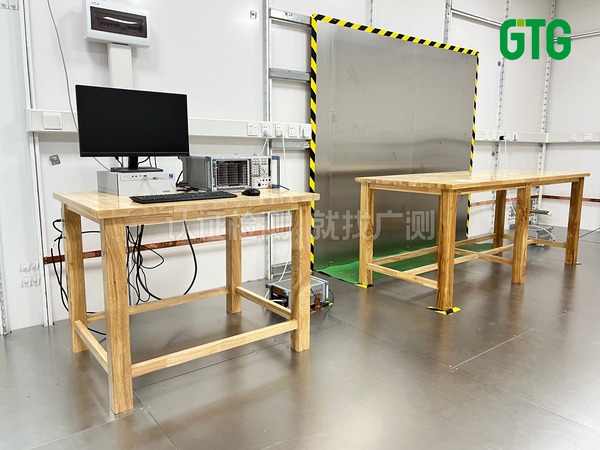
Matching the correct salt spray method to your product type is the first step toward meaningful test results. GTG operates multiple salt spray chambers capable of running NSS, AASS, and CASS simultaneously, with ISO 17025 accreditation covering ISO 9227, ASTM B117, and IEC 60068-2-11/52. Whether your product is a consumer device or marine-grade equipment, the right test protocol starts with the right lab.
This article was generated with AI assistance. Content is for reference only and does not constitute any testing commitment or legal advice. Always refer to the latest official standards.
Contact: net04@gtggroup.com