

Contact information
Free service hotline
net04@gtggroup.com
TEL: 0769-85075888-6618
13925591357
Fax: 0769-85075898
Mail: net04@gtggroup.com
ADD: Huacan Industrial Park, No. 2 Keji 8th Road, Songshan Lake Park, Dongguan City, Guangdong Province
Power-Supply-FCC-Certification-Application-Guide
FCC certification is a mandatory requirement for power supply products entering the U.S. market. This guide walks through the complete application process, applicable test standards, documentation requirements, and common pitfalls to help manufacturers navigate the compliance pathway efficiently.
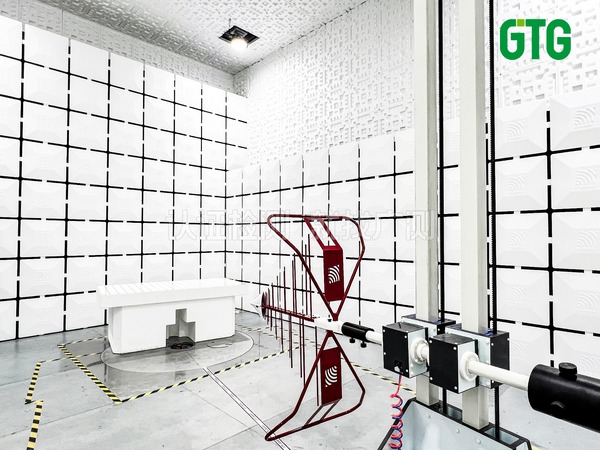
Understanding FCC Certification for Power Supplies
The Federal Communications Commission (FCC) regulates electromagnetic emissions from electronic devices sold in the United States. Power supply products—including adapters, switching power supplies, chargers, and industrial power units—fall under FCC jurisdiction and must demonstrate compliance before market entry.
Power supplies typically fall under one of two FCC compliance pathways:
FCC SDoC(Supplier's Declaration of Conformity)——Applicable to most non-wireless power supply products under FCC Part 15B
FCC ID(Certification)——Required for power supplies with integrated wireless modules (Wi-Fi, Bluetooth, etc.) under FCC Part 15C
Selling non-compliant products in the U.S. can result in FCC enforcement actions, including product seizure, fines up to $19,895 per violation per day, and mandatory product recalls.
Key Test Standards and Technical Requirements
FCC certification for power supplies primarily involves EMC testing under the following standards:
FCC Part 15B — Unintentional Radiators
All non-wireless power supplies must comply with FCC Part 15 Subpart B requirements:
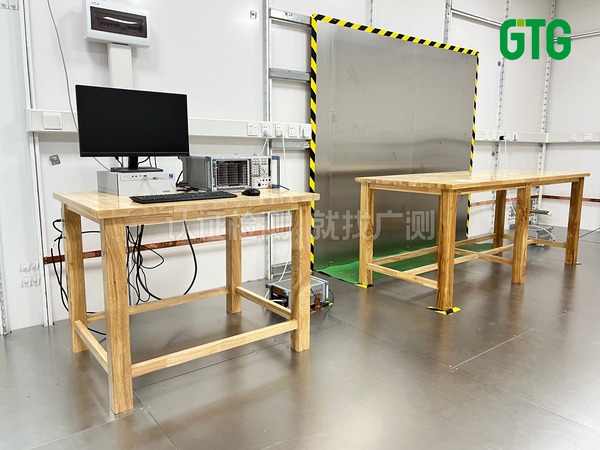
- Conducted Emissions (CE):Measured on AC power lines, 150kHz–30MHz, per ANSI C63.4 methodology. Quasi-peak and average limits apply per FCC Part 15.107
- Radiated Emissions (RE):Measured in open area test site (OATS) or semi-anechoic chamber, 30MHz–1GHz (Class B) or 30MHz–6GHz for devices with internal clocks above 108MHz, per FCC Part 15.109
Additional Standards for Wireless Power Supplies
Power supplies with wireless functionality must additionally comply with:
- FCC Part 15C (Intentional Radiators) — for Wi-Fi/Bluetooth modules
- FCC Part 15.247 — for 2.4GHz/5GHz digital modulation systems
- ANSI C63.10 — test procedures for unlicensed wireless devices
Step-by-Step Application Process
The FCC certification process for power supplies follows these key stages:
- ①Product Classification:Determine whether your power supply falls under SDoC or Certification (FCC ID) pathway. Non-wireless adapters typically use SDoC; products with radio modules require FCC ID
- ②Laboratory Testing:Submit samples to an FCC-recognized accredited laboratory. Testing covers conducted emissions, radiated emissions, and additional RF tests for wireless models
- ③Test Report Review:For SDoC, the responsible party retains the test report. For FCC ID, the report must be submitted to a TCB (Telecommunication Certification Body) for review
- ④Grant of Equipment Authorization:Upon TCB approval, the FCC ID is granted and published in the FCC database. For SDoC, the responsible party issues the declaration and maintains records
- ⑤Labeling Requirements:Apply the FCC label with either the SDoC statement or FCC ID number on the product and packaging
Practical Insight:During a multi-model adapter FCC certification project, pre-scan testing revealed radiated emissions exceeding Class B limits at 120MHz due to inadequate shielding on the switching transformer. Addressing this before formal testing saved approximately 3-4 weeks of rework time.
Required Documentation Checklist
Prepare the following documentation for FCC certification of power supply products:
- Product user manual with FCC compliance statements
- Circuit diagrams and block diagrams
- Bill of Materials (BOM) with component specifications
- Internal and external photos of the product
- Test setup photos and configuration descriptions
- FCC labeling artwork and placement details
For FCC ID applications, a designated U.S. agent (Responsible Party) must be appointed and their contact information filed with the FCC.
Timeline and Key Influencing Factors
The typical FCC certification timeline for power supplies ranges from 4-8 weeks, influenced by:
- Sample readiness:Incomplete or incorrectly configured samples delay testing start
- Test results:Non-compliant findings require design modifications and retesting, adding 2-4 weeks
- Certification pathway:SDoC is generally faster than FCC ID, as no TCB review is required
- Number of models:Series certification with multiple model variations extends test and report preparation time
Common Compliance Pitfalls to Avoid
Based on industry experience, the following issues frequently cause delays or test failures in power supply FCC certification:
- Inadequate EMI filtering:Insufficient common-mode chokes or X/Y capacitors on AC input leading to conducted emission failures
- Shielding gaps:Poor transformer shielding or enclosure gaps causing radiated emission overshoots
- Incorrect classification:Using SDoC for products that actually require FCC ID certification (e.g., PD chargers with Bluetooth)
Pro Tip:Investing in pre-compliance scanning before formal testing can identify potential emission issues early. This approach typically reduces overall project timeline and avoids costly retesting cycles. Professional testing laboratories like GTG Group offer pre-scan services specifically designed for power supply products.
This article is AI-assisted and for reference only. It does not constitute any certification commitment or legal advice. Please refer to the latest official regulations.
Contact: 13925591357 | net04@gtggroup.com