

Contact information
Free service hotline
net04@gtggroup.com
TEL: 0769-85075888-6618
13925591357
Fax: 0769-85075898
Mail: net04@gtggroup.com
ADD: Huacan Industrial Park, No. 2 Keji 8th Road, Songshan Lake Park, Dongguan City, Guangdong Province
Power-Tool-FCC-Certification-Compliance-Requirements
Electric power tools with wireless features such as Bluetooth connectivity require FCC certification before entering the U.S. market. This article outlines the FCC compliance requirements for power tools, covering applicable rule parts, testing procedures, and key considerations for manufacturers.
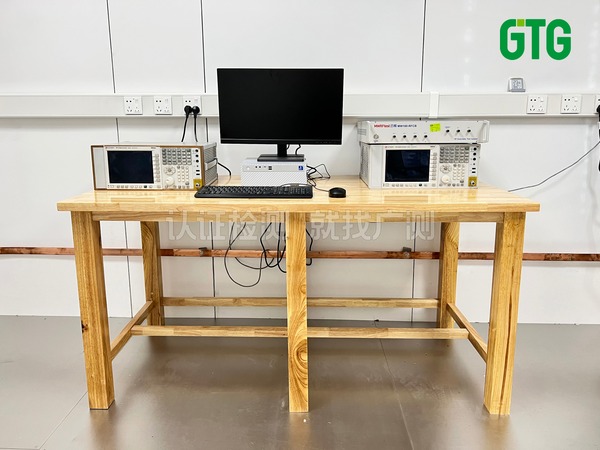
Why Power Tools Need FCC Certification
Modern power tools increasingly incorporate wireless technologies for smart features, tool tracking, and fleet management. Any power tool that contains an intentional radiator (Bluetooth, Wi-Fi, or other wireless transmitter) must comply with FCC regulations.
Common wireless features in power tools:
- Bluetooth Low Energy (BLE) for tool-pairing and app connectivity
- Wi-Fi for firmware updates and cloud connectivity
- RFID/NFC for battery authentication and tool identification
- Sub-GHz proprietary RF for remote control and tracking
Even power tools without wireless transmitters must comply with FCC Part 15B for unintentional radiators — the motor and electronic speed controller generate electromagnetic emissions that must be within FCC limits.
Applicable FCC Rule Parts for Power Tools
FCC Part 15B — Unintentional Radiators (All Power Tools)
All electric power tools, regardless of wireless capability, must comply with Part 15B emission limits:
- Conducted emissions: 150kHz - 30MHz (AC-powered tools)
- Radiated emissions: 30MHz - 1GHz (Class A for industrial, Class B for residential)
Part 15B compliance uses SDoC (Supplier's Declaration of Conformity) — no FCC ID required.
FCC Part 15C — Intentional Radiators (Wireless Power Tools)
Power tools with Bluetooth or other wireless transmitters require FCC ID certification under Part 15C:
- BLE transmitters: FCC Part 15C §15.247 (2.4GHz DTS)
- Sub-GHz RF: Applicable sections based on operating frequency
- SAR evaluation: Typically not required for hand-held tools with BLE (low power, extremity exposure exemption per KDB 447498)
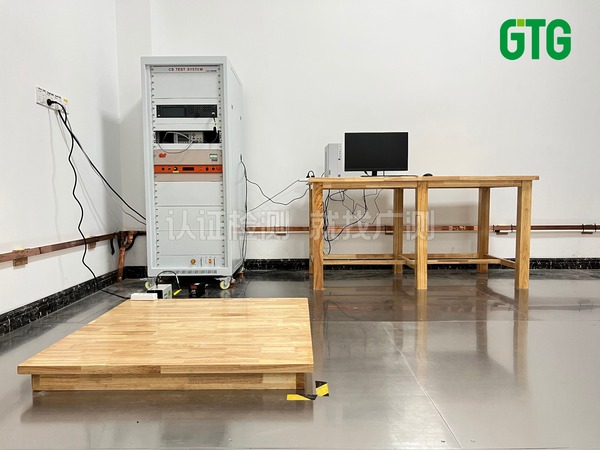
EMC Testing Challenges for Brushless Motor Power Tools
Brushless DC (BLDC) motor power tools present unique EMC challenges due to high-frequency switching of the motor controller:
- Motor switching noise:BLDC controllers switch at 20-100kHz with fast edges, generating broadband emissions that can extend well above 30MHz
- Battery cable radiation:The battery-to-tool power cable acts as an antenna for motor switching harmonics
- Variable speed interference:EMI characteristics change with motor speed, requiring testing across the full speed range
Practical Insight:In an 18V cordless drill FCC Part 15B test, radiated emissions at 80MHz exceeded the Class B limit by 8dB when the drill operated at maximum speed. Adding a ferrite clamp on the battery cable and installing an X-capacitor across the motor terminals reduced the emission by 12dB. For BLDC power tools, EMC design must be considered from the schematic stage — post-design fixes are often difficult due to space constraints in the tool housing.
FCC ID Certification Steps for Wireless Power Tools
For power tools with BLE or other wireless transmitters, the FCC ID certification process includes:
- ①Grantee Code registration:Register with the FCC to obtain a unique Grantee Code
- ②Laboratory testing:Part 15C RF testing (conducted power, occupied bandwidth, spurious emissions, band edge compliance) + Part 15B emissions testing
- ③TCB review:Submit test reports and technical documentation to a Telecommunication Certification Body
- ④FCC ID issuance:TCB issues the FCC ID, which is published in the FCC database
If the BLE module is already FCC ID certified, the power tool manufacturer may reference the module's FCC ID and conduct verification testing for the host product, depending on the modular approval conditions. GTG Group can evaluate whether your existing module certification covers the tool-level requirements.
Labeling and Documentation Requirements
FCC compliance requires proper labeling and documentation:
- Part 15B products: FCC compliance statement in user manual; product label with "Contains FCC ID: XXX" (if using certified module)
- Part 15C products (FCC ID): FCC ID mark on product label; compliance statements in user manual
- Technical documentation must be retained for at least 2 years after product discontinuation
Typical certification timeline ranges from 6-10 weeks for wireless power tools, including testing and TCB review.
This article is AI-assisted and for reference only. It does not constitute any certification commitment or legal advice. Please refer to the latest official regulations.
Contact: 13925591357 | net04@gtggroup.com