

Contact information
Free service hotline
net04@gtggroup.com
TEL: 0769-85075888-6618
13925591357
Fax: 0769-85075898
Mail: net04@gtggroup.com
ADD: Huacan Industrial Park, No. 2 Keji 8th Road, Songshan Lake Park, Dongguan City, Guangdong Province
SRRC Certification for Wireless Cameras: A Practical Compliance Guide
If your camera transmits data wirelessly — via Wi-Fi, 4G/5G, Bluetooth, Zigbee, or LoRa — it cannot legally be sold in mainland China without an SRRC (State Radio Regulation of China) type approval certificate. This guide walks through the applicable standards, testing requirements, application process, and the most common reasons submissions get rejected.
What Is SRRC Certification?
SRRC stands for State Radio Regulation of China. Under the Regulations on Radio Management of the People's Republic of China (State Council & Central Military Commission Decree No. 128), all radio-transmitting equipment manufactured, sold, or used within China must obtain a type approval certificate issued by the Ministry of Industry and Information Technology (MIIT).
For camera products, the following categories typically require SRRC approval:
- Wi-Fi surveillance cameras (2.4 GHz / 5 GHz)
- 4G LTE / 5G cellular cameras
- Bluetooth-enabled cameras
- IoT cameras using Zigbee, LoRa, or other RF protocols
Importantly, even if you integrate a wireless module that already holds its own SRRC certificate, the finished camera product still needs a separate type approval. The module-level certificate does not transfer to the end product.
Field note: In a recent pre-compliance review, a manufacturer assumed their camera was exempt because the onboard Wi-Fi module was already SRRC-approved. The application was returned — the whole product must be tested independently, though the scope of testing may be narrower when a certified module is used.
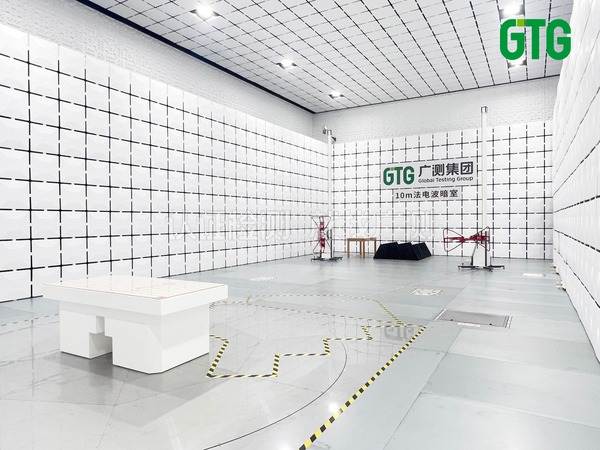
Applicable Standards & Test Items
The specific standards depend on the wireless technology your camera uses. Here is a summary of the most common frameworks:
EMC (Electromagnetic Compatibility)
GB 13837-2012 — Limits and methods of measurement for radio disturbance characteristics of broadcast receivers
GB 17625.1-2012 — Harmonic current emission limits
Wi-Fi Devices (2.4 GHz / 5 GHz)
MIIT Document No. 353 (2002) and related technical requirements for spread-spectrum communication equipment
Cellular Devices (4G LTE / 5G)
YD/T 2583 series — Additional RF testing for transmit power, occupied bandwidth, and spurious emissions
Bluetooth Devices
MIIT Document No. 353 (2002) — Technical requirements for 2.4 GHz spread-spectrum communication equipment
Across all categories, the core RF test parameters include:
- Transmit power — peak and average output levels
- Frequency tolerance — deviation from the assigned frequency
- Occupied bandwidth — spectrum usage within the allocated channel
- Spurious emissions — conducted and radiated emissions outside the intended band
- Adjacent channel power — leakage into neighbouring frequencies
Watch out: Dual-band cameras (2.4 GHz + 5 GHz) require full testing on each band separately. If the 5 GHz radio supports DFS (Dynamic Frequency Selection), additional DFS-specific tests apply — which adds both time and cost to the process.
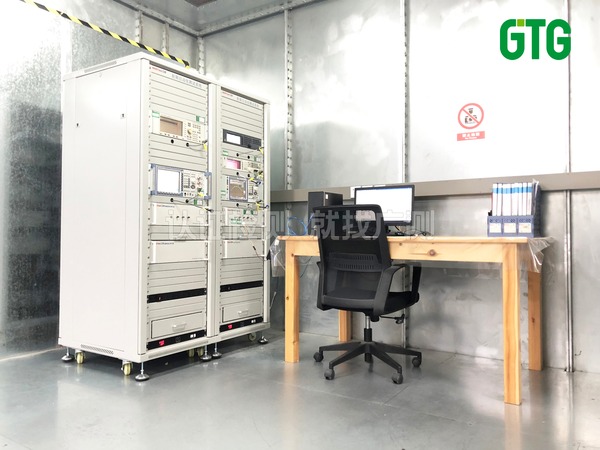
Application Process
The SRRC application process for camera products follows five key stages:
Step 1 — Define wireless parameters. Identify the communication protocol, operating frequency bands, transmit power, and antenna specifications. This determines which standards apply.
Step 2 — Prepare documentation. Required materials include a business licence, product datasheet, circuit schematics, PCB layout, RF module specifications, and product photographs (all exterior surfaces, internal board layout, connectors, and label placement).
Step 3 — Submit samples for testing. Ship product samples to an accredited laboratory capable of conducting SRRC testing.
Step 4 — Review the test report. Once testing is complete, the lab issues a formal report. Verify that all product details and measured values are accurate before proceeding.
Step 5 — File the application. Submit the type approval application through the MIIT online portal, uploading the test report and all supporting documents.
Field note: In recent cases, roughly 30% of first-time camera applications were returned due to insufficient product photographs. Images must clearly show every exterior face, port locations, label positions, and internal PCB and RF module layout. Prepare these in advance to avoid delays.
Common Reasons for Rejection
Based on industry feedback, the most frequent causes of application returns are:
- RF parameter mismatch — the actual measured transmit power or frequency deviates from what was declared in the application
- Spurious emission failure — out-of-band emissions exceed the limit, usually requiring RF circuit redesign
- Incomplete documentation — missing schematics, low-resolution photos, or vague RF parameter descriptions
- Sample-production discrepancy — the submitted sample differs from the mass-production version, which can trigger compliance issues during later market surveillance
The overall timeline depends on three factors: sample readiness, number of test rounds (whether re-testing is needed after整改), and documentation completeness. Thorough pre-compliance testing before the formal submission is the most effective way to avoid unexpected delays.
Tip: A preliminary scan at an accredited lab before the formal submission can catch most RF and EMC issues early. This step alone eliminates the majority of first-round failures.
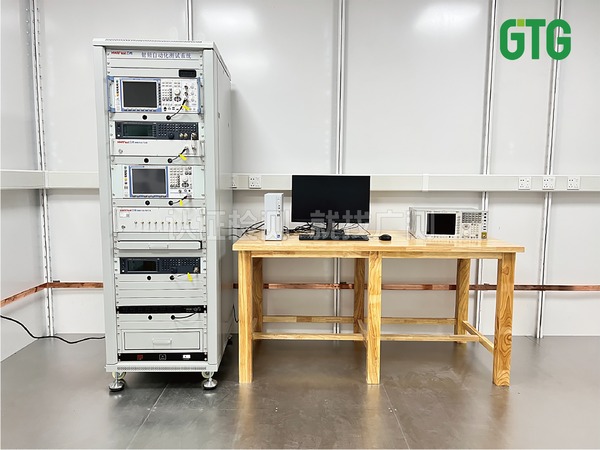
Frequently Asked Questions
How much does SRRC certification cost?
Costs vary depending on the wireless technology, number of frequency bands, and required test scope. Wi-Fi-only cameras tend to be on the lower end, while multi-band or cellular devices require more extensive testing. Contact an accredited testing provider for a quote based on your product configuration.
How long is an SRRC certificate valid?
The type approval certificate is valid for five years. Renewal must be filed before expiration. If the product design changes — such as a different RF module or antenna configuration — a new application is required.
Do I need SRRC if my Wi-Fi module is already certified?
Yes. The module certificate covers only the module itself. The finished camera product requires its own type approval. That said, using a pre-certified module may simplify the testing scope — the focus shifts to whole-device EMC performance and antenna radiation characteristics.
My product already has FCC or CE certification. Can I use that for the Chinese market?
No. FCC and CE certifications are not recognised in China. The Chinese market has its own frequency allocation plans, power limits, and testing methodologies. A separate SRRC application is mandatory. Planning for both domestic and international certification early in the product development cycle is the most efficient approach.
What are the penalties for selling without SRRC approval?
Under Article 70 of the Radio Management Regulations, manufacturing or selling unapproved radio equipment can result in confiscation of illegal revenue and fines of 1 to 3 times the value of the non-compliant products. SRRC compliance should be treated as a non-negotiable pre-market requirement.
Key Takeaways
SRRC certification is the legal gateway for any wireless camera entering the Chinese market. The process is straightforward when approached methodically — define your RF parameters early, run pre-compliance scans, and ensure your documentation is complete before filing.
Working with an experienced testing and compliance partner can help you navigate the process efficiently and minimise the risk of re-testing. For product-specific guidance or a tailored testing proposal, reach out to GTG Group at net04@gtggroup.com.
This article was generated with AI assistance. Content is for informational purposes only and does not constitute legal or certification advice. Always refer to the latest official regulations.
Contact: net04@gtggroup.com