

Contact information
Free service hotline
net04@gtggroup.com
TEL: 0769-85075888-6618
13925591357
Fax: 0769-85075898
Mail: net04@gtggroup.com
ADD: Huacan Industrial Park, No. 2 Keji 8th Road, Songshan Lake Park, Dongguan City, Guangdong Province
Switch_ISED_Canada_Certification
Network switches deployed in data center, enterprise, and carrier infrastructure in Canada must comply with ISED (Innovation, Science and Economic Development Canada) regulations for both unintentional emissions (ICES-003) and, for managed switches with wireless management interfaces, intentional radiator requirements (RSS-247 for Wi-Fi/BT). For switch manufacturers accustomed to FCC Part 15B (US) and CE-EMC (EU), the ISED compliance pathway introduces a unique structure: a 1-2 year ISED Interim certification that transitions to permanent ISED Terminal Equipment registration, combined with Canada-specific labeling (French/English bilingual) and a mandatory ISED Company Number (CN) registration. This article maps the ISED compliance pathway for enterprise switches and the data-reuse opportunities from existing FCC and CE certifications.
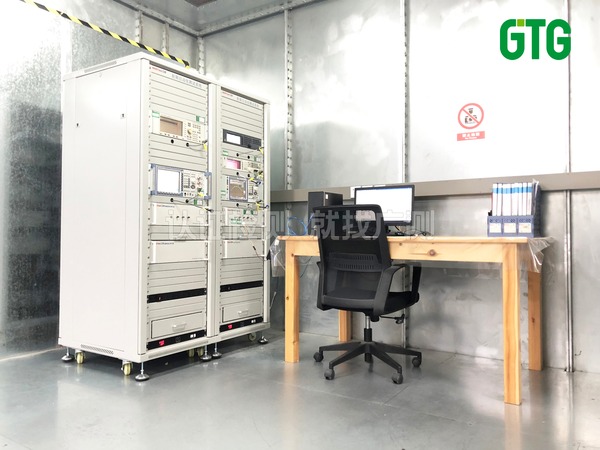
ISED Regulatory Framework for Switches — ICES-003 and RSS-247
Switches fall under two ISED regulatory documents:
ICES-003 Issue 7 — Unintentional Emissions Canada's equivalent of FCC Part 15B for Information Technology Equipment (ITE). Radiated emission limits for Class A (industrial/commercial): 30-88 MHz = 90 μV/m @ 10 m, 88-216 MHz = 150 μV/m, 216-960 MHz = 210 μV/m, >960 MHz = 300 μV/m. For Class B (residential), the limits are approximately 10 dB stricter across all bands. Switches deployed in data centers and enterprise wiring closets default to Class A, but the product's marketing language determines classification — if the switch is sold through retail channels, ISED may require Class B.
RSS-247 — Intentional Radiators (Wi-Fi/BT) Applicable if the switch has an embedded wireless management module (common in enterprise AP-managed switches). RSS-247 maps closely to FCC Part 15C §15.247 for 2.4 GHz DTS operation. Test data generated per ANSI C63.10 is accepted by ISED without re-measurement — the key ISED-specific item is the French-language compliance statement on the label and in the user manual.
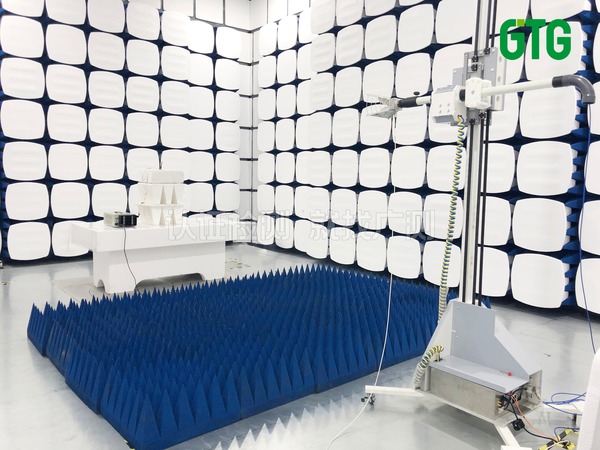
ISED Certification Process — Company Number + Interim to Permanent Path
- ①Register ISED Company Number (CN) — Before any product certification, the manufacturer or Canadian representative must register with ISED to obtain a unique Company Number. This is a one-time registration per legal entity.
- ②Submit test report to an ISED-recognized CB (Certification Body) — FCC Part 15B/15C test reports from an ISED-recognized lab are accepted through the US-Canada MRA. The CB reviews and issues the ISED certificate (IC: XXXXX-YYYYYYYY).
- ③Labeling: The switch must display "IC: XXXXX-YYYYYYYY" on the product label, along with the required French/English compliance statement. The statement must read in both languages: "This device complies with ISED's licence-exempt RSS(s)" / "Le présent appareil est conforme aux CNR d'ISDE Canada..."
For switches that already hold FCC certification, the ISED process is primarily a document review rather than re-testing — the FCC test data is accepted wholesale, reducing the incremental effort to ISED filing and labelling compliance. switch FCC ISED certification data sharing pathway documentation.
Switch-Specific EMC Considerations — High-Density Port Emissions
A 24/48-port enterprise switch presents unique EMC challenges under ICES-003: the 24 or 48 Ethernet ports, when active simultaneously, create a composite emission field from the combined cable radiation. ISED's EMC test configuration requires all ports to be connected and active (per ICES-003 §6.2), with representative traffic (typically 30% line rate minimum) flowing through each port. The switch's internal power supply (usually a hot-swappable PSU module) must also be certified — either as a UL/CSA Recognized component or with its own ISED certification.
Frequently Asked Questions
Q1 Can an FCC Part 15B test report directly serve as ISED ICES-003 evidence?
Yes — ISED accepts FCC Part 15B test reports from ISO 17025-accredited labs under the US-Canada MRA. The report must state compliance with ICES-003 Issue 7 (the Canadian standard) and the test must have been conducted at 120V/60Hz. An FCC Part 15B report that only references FCC limits must have an addendum or cover letter stating ICES-003 equivalence.
Q2 Does a switch with only fiber (SFP/SFP+) ports need ICES-003?
Yes — ICES-003 applies to all "ITE devices" regardless of port type. Fiber-only switches still have digital circuitry that generates unintentional radiated emissions. The test configuration differs: fiber ports are populated with SFP modules and active fiber links (or loopback SFP modules that simulate active traffic).
Q3 Can an ISED Company Number be transferred between manufacturers?
No — an ISED Company Number is tied to the specific legal entity that registered it. If the product's manufacturer changes, the new manufacturer must register its own CN and re-file the ISED certification under the new CN. This is a frequent compliance gap when companies restructure or outsource manufacturing.
Q4 How does PoE (Power over Ethernet) change the ISED compliance testing?
PoE switches inject DC power (48-57V) onto Ethernet cables. The PoE power supply section is subject to the same ICES-003 emission limits as the switch's data circuitry. Additionally, the combined conducted emissions from all PoE ports at full load (802.3bt Type 4, up to 90W per port) must be measured — the PoE PSU's switching noise (typically 100-300kHz) superimposes on the AC mains conducted emission profile.
Q5 Is ISED certification sufficient for switch sales in Quebec?
ISED certification covers federal radio and EMC compliance. Quebec imposes additional requirements: product labelling and user manual must be in French (per Quebec's Charter of the French Language), and certain public-sector procurement may require BNQ (Bureau de normalisation du Québec) certification for electrical safety — separate from ISED.
This content is for informational reference only. For inquiries, please contact us.
Phone: +86 13925591357 | Email: net04@gtggroup.com | https://www.gtggroup.cn