

Contact information
Free service hotline
net04@gtggroup.com
TEL: 0769-85075888-6618
13925591357
Fax: 0769-85075898
Mail: net04@gtggroup.com
ADD: Huacan Industrial Park, No. 2 Keji 8th Road, Songshan Lake Park, Dongguan City, Guangdong Province
Rugged_Tablet_FCC_MIL-STD_Compliance
Rugged tablets deployed in field service, warehouse logistics, and military applications present a dual compliance challenge: FCC ID certification for their multi-radio subsystems (Wi-Fi 6E, 5G NR, Bluetooth, GNSS, and increasingly UWB), combined with environmental durability validation per MIL-STD-810H or IEC 60529 ingress protection ratings. The interaction between ruggedization — sealed enclosures, metal chassis, impact-absorbing bumpers — and RF performance creates compliance variables not encountered in consumer tablets. This article examines the FCC certification framework for rugged tablets and the engineering implications of environmental hardening on RF performance and EMC compliance.
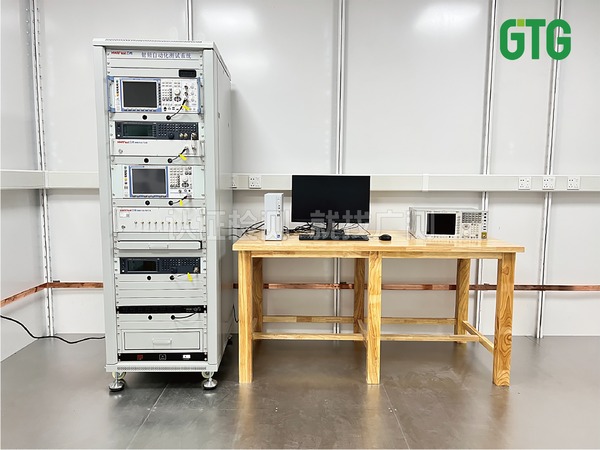
FCC Certification Framework — Composite Device with Multi-Radio Modules
A rugged tablet is classified as a composite device under FCC rules (47 CFR §2.947), with a single FCC ID grant listing each radio function:
FCC Part 15C §15.247 — Wi-Fi 2.4 GHz + Bluetooth DTS operation in 2.402-2.480 GHz band. Testing per ANSI C63.10: conducted output power ≤ 1 W (30 dBm), 6 dB bandwidth ≥ 500 kHz, PSD ≤ 8 dBm/3 kHz. For Wi-Fi 6E (5.925-7.125 GHz), additional §15.407 U-NII rules apply with AFC (Automated Frequency Coordination) requirements for standard-power indoor access points — though most rugged tablets operate as client devices exempt from AFC.
FCC Part 22/24/27 — 5G NR and LTE Bands 5G NR FR1 (sub-6 GHz) modular certification is the standard compliance path. The rugged tablet references the module's FCC ID grant, provided the host integration conditions match the grant's specified antenna gain limits and usage modes. If the tablet uses an external antenna with gain exceeding the module grant's limit, a Class II Permissive Change or full certification is required.
FCC Part 15B — Unintentional Emissions The tablet's computing subsystem (CPU, memory bus, display interface, USB docking connector) falls under Part 15B Class B digital device requirements. Radiated emissions measured at 3 m from 30 MHz–40 GHz (up to 5th harmonic of the highest clock frequency).
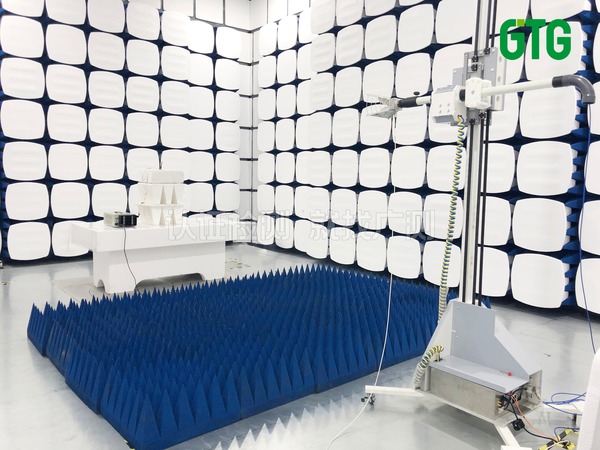
Ruggedization vs. RF Performance — The Sealed Enclosure Effect
Rugged tablets present three RF design constraints not found in consumer devices:
- Metal chassis detuning: A die-cast magnesium alloy frame — common in MIL-STD-810H rated tablets — acts as a ground plane that can detune onboard antennas, shift resonant frequencies by 50-100 MHz, and reduce antenna efficiency by 2-4 dB. Antenna matching must be performed with the antenna mounted in the final chassis, not on a test PCB.
- Sealed enclosure and TRP/TIS: IP67/IP68 watertight sealing prevents the use of open antenna apertures — all antennas must radiate through the enclosure material. Polycarbonate/ABS blends have lower dielectric loss than glass-reinforced nylon, but compromise impact resistance. This trade-off between RF transparency and mechanical durability requires co-optimization between RF and mechanical engineering teams.
- Corner-drop bumper grounding: The rubber/TPU bumpers that protect tablet corners during drop testing can accumulate static charge and discharge to the tablet's metal chassis during handling — creating an ESD path not present in consumer tablets. The FCC Part 15B ESD test follows the same IEC 61000-4-2 procedure (±4 kV contact / ±8 kV air), but the rugged tablet's grounding scheme must provide a defined discharge path from all bumper contact points.
Dual FCC + MIL-STD Testing Strategy — Shared Test Assets, Separate Reports
MIL-STD-810H environmental testing (thermal shock, humidity, vibration, shock, salt fog) and FCC compliance testing are independent test programs, but they should be sequenced for efficiency:
- ①Perform FCC RF pre-scans on prototype samples before environmental stress — establish baseline RF performance.
- ②Conduct MIL-STD-810H thermal cycling (-30°C to +60°C) and vibration (10-500 Hz sweep, 3 axes) on a separate set of samples.
- ③Re-measure RF on the MIL-STD samples — verify no performance degradation exceeding 2 dB in conducted power or 5% in EVM. This provides evidence that ruggedization does not compromise RF compliance, which some FCC test labs will accept as a supplementary data point.
This sequencing approach rugged tablet FCC MIL-STD-810H joint test program avoids the scenario where MIL-STD-810H testing damages a sample that is then unusable for FCC certification — a common scheduling mistake in first-time rugged product programs.
Frequently Asked Questions
Q1 Does a rugged tablet with a pre-certified 5G module need full FCC Part 22/24 testing?
If the module integration respects the grant's antenna gain limit and the host's emissions do not amplify the module's spurious output, the module's grant covers the 5G radio. However, the host (tablet) must still undergo radiated spurious emission testing with the 5G module transmitting — the combined host+module system may produce emissions not present in the module's standalone certification, especially if the tablet's other radios are active simultaneously.
Q2 Can the same test sample serve both FCC and MIL-STD-810H?
Not recommended. MIL-STD-810H testing involves thermal shock (up to 85°C transitions), multi-axis vibration, and drop testing — conditions that may alter antenna connections, solder joint integrity, or PCB impedance matching. FCC testing should use samples that have not undergone environmental stress. The recommended approach is separate sample sets with RF pre/post comparison, as detailed in Section 3.
Q3 Does Wi-Fi 6E (6 GHz) require AFC for a rugged tablet client?
No — FCC §15.407(k) AFC requirements apply only to standard-power access points (APs), not to client devices. Rugged tablets operating as Wi-Fi 6E clients in the 6 GHz band follow low-power indoor (LPI) rules: conducted power ≤ 24 dBm, PSD ≤ 11 dBm/MHz, and the device must be under the control of an AP. No geolocation or AFC capability is required for client devices under current FCC rules.
Q4 How does a rugged tablet's hot-swappable battery affect FCC certification?
If the battery is a field-replaceable unit (FRU), the FCC Part 15B conducted emissions test must be performed with a fully charged battery and with the charger connected — the charger input (AC mains) is the conducted emission measurement point. If multiple battery capacities are offered, the battery variant that draws the highest charging current is selected as the representative configuration.
Q5 Is SAR testing required for rugged tablets used with vehicle docks?
For tablets operated at ≥ 20 cm separation from the user — which covers most vehicle-mounted and desk-stand deployments — SAR testing is not required; compliance follows the MPE (Maximum Permissible Exposure) path per FCC KDB 447498. However, if the tablet is also marketed as a handheld device with < 20 cm user separation, SAR testing for body-worn configurations becomes mandatory. The intended use declaration in the user manual determines the testing path.
This content is for informational reference only. Specific certification requirements must be evaluated by professional engineers. For inquiries, please contact us.
Phone: +86 13925591357 | Email: net04@gtggroup.com | https://www.gtggroup.cn