

Contact information
Free service hotline
net04@gtggroup.com
TEL: 0769-85075888-6618
13925591357
Fax: 0769-85075898
Mail: net04@gtggroup.com
ADD: Huacan Industrial Park, No. 2 Keji 8th Road, Songshan Lake Park, Dongguan City, Guangdong Province
Interactive_Display_FCC_CE-RED_Compliance
Interactive flat panel displays — deployed in classrooms, boardrooms, and digital signage networks — are multi-radio devices that must simultaneously satisfy FCC Part 15B/15C for the US market and the CE-RED directive for Europe. The engineering challenge is not that either standard is intractable in isolation, but that a product designed and tested for one market often encounters unexpected compliance gaps when submitted for the other — gaps that stem from differing radiated emission limits, receiver performance test requirements, and antenna co-location evaluation criteria. This article provides a technical comparison of the FCC and CE-RED compliance frameworks for interactive displays, identifying where dual-market designs can share test data and where dedicated testing is unavoidable.
EMC Emission Standards — Where FCC and CE-RED Diverge
The EMC emission testing framework reveals several structural differences that affect how an interactive display is configured for testing:
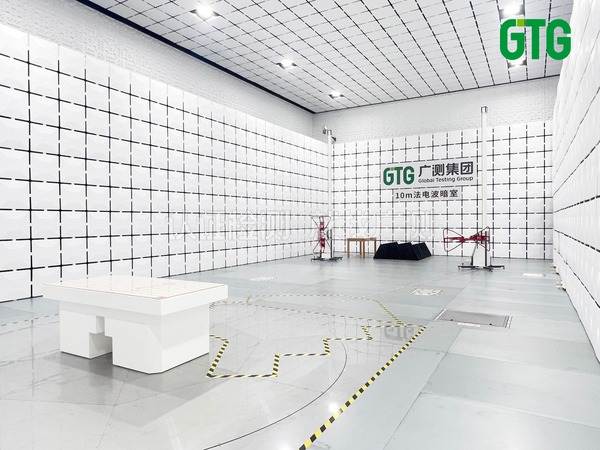
- Radiated emission measurement distance: FCC Part 15B specifies a 3-meter test distance above 1 GHz, while EN 55032 allows both 3 m and 10 m options below 1 GHz. For large interactive displays (≥ 75 inches), a 3 m test distance may cause the EUT to extend into the near-field zone of the antenna, potentially invalidating the measurement. Under CE-RED, testing at 10 m with distance extrapolation (20 dB/decade) is often the more defensible choice for large-format displays.
- Class A vs. Class B threshold: Both FCC and CE-RED assign Class B (stricter residential limits) to products "likely to be used in residential environments." The interpretation of "likely" differs: FCC's guidance is more conservative, often classifying classroom displays as Class B, while some CE-RED Notified Bodies accept a Class A declaration for products sold exclusively as commercial/educational equipment with contractual usage restrictions. This classification decision can shift the emission limit by 10 dB — a margin that may determine whether a large display passes without additional shielding.
- Conducted emission LISN impedance: FCC uses a 50 μH + 5 Ω LISN per ANSI C63.4, while CISPR 32 (harmonized under CE-RED) specifies a 50 μH || 50 Ω LISN per CISPR 16-1-2. The impedance difference is minor at low frequencies but can produce a 2-3 dB variation in the transition region (150-500 kHz), which matters when a product operates near the limit.
RF Testing — FCC Part 15C vs. ETSI EN 300 328
Shared Test Items (Data Reuse Possible)
- RF output power (conducted): FCC Part 15.247(b) and EN 300 328 clause 4.3.2.2 both measure conducted peak/average power, with similar measurement procedures (RBW ≥ 1 MHz, VBW ≥ 3 MHz). If the conducted power test setup and data format meet both standards' requirements (traceable to the same calibration chain), the test data can serve both submissions.
- Occupied bandwidth (6 dB / 99%): Both standards require 6 dB bandwidth measurement for DTS systems. EN 300 328 additionally requires 99% OBW. A single measurement sweep can capture both metrics if the spectrum analyzer is configured to compute both simultaneously.
- Power spectral density: FCC §15.247(e) limits PSD to 8 dBm/3 kHz; EN 300 328 clause 4.3.2.3 limits to 10 dBm/MHz. These are measured at different RBW settings, and conversion between them is not mathematically straightforward (PSD is not flat across frequency in real signals), so separate measurements are generally required.
CE-RED-Only Items (No FCC Equivalent)
- Receiver blocking: EN 300 328 clause 4.3.1.11 requires the receiver to maintain PER ≤ 10% with a -30 dBm blocking signal present at ±20 MHz offset. FCC has no equivalent test.
- Adaptivity (Listen-Before-Talk): EN 300 328 clause 4.3.2.6 requires equipment using frame-based equipment or load-based equipment protocols to demonstrate channel access mechanisms. FCC has no adaptivity requirement — the test must be set up specifically for CE-RED.
- Transmitter spurious emissions below 1 GHz: EN 300 328 measures down to 30 MHz, while FCC Part 15C starts at the 9 kHz-10th harmonic range. The CE-RED lower start frequency often captures conducted spurs from the switching power supply that the FCC test would miss.
Antenna Co-Location — A Cross-Market Testing Strategy
Interactive displays increasingly integrate Wi-Fi 2.4 GHz, Wi-Fi 5 GHz, Bluetooth, and NFC antennas in close proximity. Both FCC and CE-RED require evaluation of simultaneous transmission scenarios, but the evaluation approach differs:
- FCC guidance (KDB 447498 / KDB 616217): Requires SAR or MPE evaluation for co-located transmitters. For interactive displays used at ≥ 20 cm distance, MPE evaluation through field strength measurement is the standard path.
- CE-RED under EN 300 328 + EN 301 893: Co-location is assessed through spurious emission measurements with all transmitters active simultaneously, plus an assessment of intermodulation products falling within receiver bands. A single interactive display multi-radio co-location FCC RED test plan can serve both submissions if the test configuration matrix is designed to capture both standards' requirements in a single measurement campaign.
Frequently Asked Questions
Q1 Can a single test report serve both FCC and CE-RED submissions?
No — FCC and CE-RED require separate reports with jurisdiction-specific formatting. However, the underlying measurement data for overlapping test items (conducted power, occupied bandwidth, band-edge compliance) can be generated during a single test session and formatted into both report templates. This joint testing approach reduces total chamber time compared to running two independent campaigns. See Section 2 for the item-by-item overlap analysis.
Q2 What is the most common dual-market compliance gap for interactive displays?
The receiver blocking test (EN 300 328 clause 4.3.1.11) is the most frequent gap — a Wi-Fi module that passes FCC Part 15C easily may fail the CE-RED blocking requirement because the module's front-end LNA was not designed to reject a -30 dBm blocker. This is a hardware-level design choice that cannot be resolved through firmware alone; it requires a front-end filter or a different RF transceiver IC selection.
Q3 Does the ERP energy label requirement interact with FCC or CE-RED?
ERP is a separate EU regulatory track and does not interact with FCC. However, for dual-market products, the energy label information (EEI class) is required on the EU EPREL database and on the product packaging for EU sales — this documentation must be ready at the same time as the CE-RED DoC to avoid a situation where the product has RED approval but cannot be listed on EU retail platforms due to missing energy labeling.
Q4 How does the OPS (slot-in PC) module affect FCC and CE-RED compliance?
The OPS module is evaluated as part of the host configuration. Under FCC, the host+OPS combination is tested as a composite system. Under CE-RED, the OPS module may be tested as the "worst case" host configuration if it introduces additional wireless radios. If the OPS module is separately certified (FCC ID / CE-RED DoC), the host certification can reference the module's grant, but the host must still undergo radiated emission testing with the OPS installed. The detailed process is explained in Section 3.
Q5 Can a display certified to FCC Class A be re-classified for CE-RED?
FCC Class A test data cannot be directly mapped to CE-RED Class B requirements because the emission limits differ by approximately 10 dB across the 30 MHz–1 GHz range. However, the Class A data provides useful information: if the product's emissions are more than 10 dB below the FCC Class A limit, the product has a reasonable chance of meeting CE-RED Class B at 10 m measurement distance. A interactive display FCC CE-RED joint pre-compliance scan can quickly assess this margin.
This content is provided for industry communication and informational reference only and does not constitute any form of certification commitment, testing advice, or legal opinion. The certification requirements, procedures, and standards referenced herein may change as regulations evolve — please refer to the latest official announcements from the relevant authorities. Specific certification requirements, timelines, and costs must be evaluated by professional engineers based on the actual product. For inquiries, please contact us by phone.
Phone: +86 13925591357 | Email: net04@gtggroup.com | https://www.gtggroup.cn