

Contact information
Free service hotline
net04@gtggroup.com
TEL: 0769-85075888-6618
13925591357
Fax: 0769-85075898
Mail: net04@gtggroup.com
ADD: Huacan Industrial Park, No. 2 Keji 8th Road, Songshan Lake Park, Dongguan City, Guangdong Province
EV_Charging_Cable_CE_Market_Access
EV charging cables entering the European market must demonstrate compliance with a layered regulatory framework spanning electrical safety (LVD), electromagnetic compatibility (EMC), and — for cables with embedded electronics — radio equipment requirements (RED). Unlike the charging station itself, which falls under a more complex conformity assessment regime, the charging cable's certification pathway follows a manufacturer-declared CE route, but carries distinct testing implications that procurement teams and export managers at charging infrastructure brands need to navigate. This article maps the complete conformity pathway, from applicable standards to technical file construction, with attention to the practical differences between Mode 2 and Mode 3 cables.
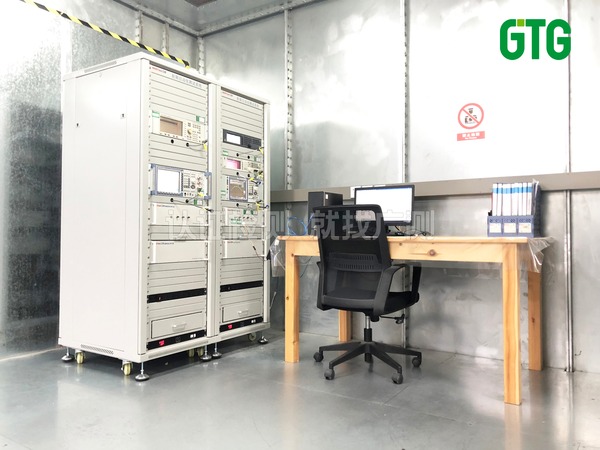
Applicable Standards — The Compliance Hierarchy for EV Cables
EV charging cables in Europe are assessed against a three-tier standards framework, with the specific standards invoked depending on whether the cable is Mode 2 (portable, with in-cable control and protection device IC-CPD) or Mode 3 (fixed installation or tethered to a charging station).
Safety (LVD) Standards
EN IEC 61851-1 Electric vehicle conductive charging system — General requirements. Covers protection against electric shock (basic + fault protection), insulation coordination (overvoltage category III for mains-connected parts), creepage and clearance distances, and temperature rise limits for accessible parts (≤ 50 K for metallic handles, ≤ 60 K for non-metallic).
EN 62196-2 Plugs, socket-outlets, vehicle connectors and vehicle inlets — Dimensional compatibility for AC pin and contact-tube accessories. Specifies mechanical lifetime (≥ 10,000 mating cycles without degradation exceeding 5 mΩ contact resistance increase), insertion/extraction force limits, and environmental sealing (IP44 minimum for outdoor use).
EN 62752 In-cable control and protection device (IC-CPD) for Mode 2 charging. Applies only to Mode 2 cables with embedded electronics — testing includes DC residual current detection (6 mA threshold), protective conductor continuity monitoring, and automatic supply disconnection within specified time limits under fault conditions.
EMC Standards
EN IEC 61851-21-2 EMC requirements for off-board EV charging equipment. Defines emission limits (conducted 150 kHz–30 MHz per CISPR 16-2-1, radiated 30 MHz–1 GHz at 10 m distance), immunity requirements (ESD ±8 kV contact / ±15 kV air per EN 61000-4-2, surge ±2 kV line-to-line / ±4 kV line-to-ground per EN 61000-4-5), and specific operational modes for testing — charging cable must be tested at maximum rated current and in idle/standby states.
EN 55014-1 / EN IEC 61000-3-2 May additionally apply if the cable incorporates an electronic switch-mode power supply for the IC-CPD logic — harmonic current emissions must stay below the Class A limits of EN IEC 61000-3-2.
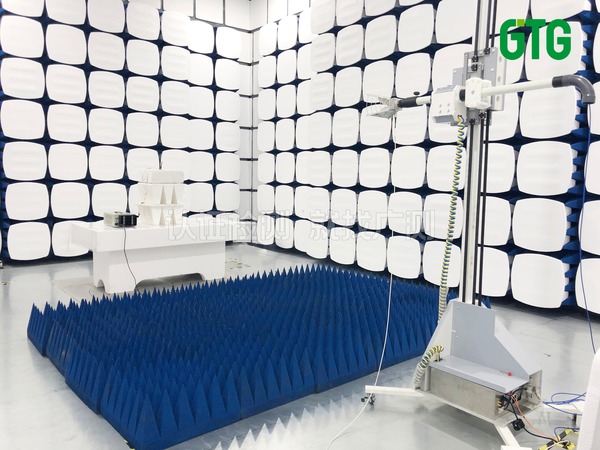
Mode 2 vs. Mode 3 Cables — Why the Certification Pathway Diverges
The fundamental distinction between Mode 2 and Mode 3 charging cables under CE requirements arises from the integration of active electronics.
Mode 2 cables (portable EVSE) Include an IC-CPD box housing the control logic, residual current detection, and — increasingly — a 4G/Wi-Fi module for smart charging communication. The IC-CPD must be independently certified to EN 62752, and any wireless module triggers additional CE-RED requirements under Directive 2014/53/EU. This effectively splits Mode 2 cable certification into three parallel workstreams: the cable assembly (LVD), the IC-CPD (LVD + functional safety), and the wireless module (RED).
Mode 3 cables (fixed/tethered) Are passive assemblies — connectors, cable, and mechanical housing — with no active electronics. The certification scope is limited to the cable's electrical safety and mechanical integrity under EN 62196-2 and the mechanical/thermal clauses of EN IEC 61851-1. This simpler pathway requires fewer test items and shorter evaluation cycles compared to Mode 2 cables.
For brands managing a mixed Mode 2/Mode 3 portfolio, a Mode 2 and Mode 3 EV cable CE certification comparison audit at the product planning stage prevents over-testing Mode 3 cables or under-testing Mode 2 cables with integrated wireless functions.
Technical File Construction and the Declaration of Conformity
The CE conformity assessment for EV charging cables under Module A (internal production control) requires the manufacturer to compile and retain a Technical File containing:
- ①Product description — model list, rated voltage/current (230 V/400 V, 10 A/16 A/32 A single-phase or three-phase), connector type (Type 2 per EN 62196-2), cable construction (conductor cross-section, insulation material, sheath characteristics), and IP rating
- ②Risk assessment — per LVD Annex III, covering electrical hazards (direct/indirect contact, overcurrent, residual current), mechanical hazards (crushing, impact, strain relief failure), and thermal hazards (overheating under continuous rated load)
- ③Test reports — from an ISO 17025-accredited laboratory, covering EN IEC 61851-1, EN 62196-2, EN IEC 61851-21-2, and EN 62752 (Mode 2 only)
- ④EU Declaration of Conformity — signed by the manufacturer or EU Authorized Representative, listing all applicable directives and harmonized standards
- ⑤Component-level compliance evidence — connector certification (VDE/ENEC), cable HAR marking or EN 50620 compliance statement, IC-CPD EN 62752 test report (Mode 2)
Key note: The Authorized Representative based in the EU must retain the Technical File for at least 10 years after the last unit is placed on the market. Brands should EV charging cable EU Authorized Representative obligations in their supplier agreements — a representative that goes out of business without transferring the file can leave the brand exposed to market surveillance actions.
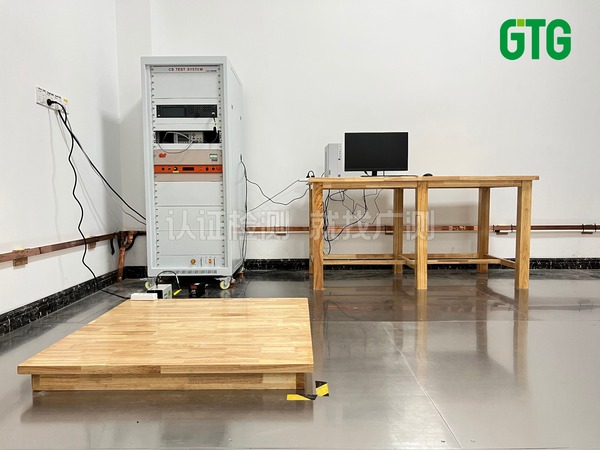
Frequently Asked Questions
Q1 Does a Mode 3 cable sold as an accessory need separate CE marking?
Yes. A Mode 3 cable sold as a standalone accessory (not bundled with a charging station) is considered an independent product under EU law and must bear its own CE mark with a corresponding DoC. The cable cannot rely on the charging station's CE documentation even if it is mechanically compatible with that specific station model.
Q2 How does the EU's Cyber Resilience Act (CRA) affect smart charging cables?
The CRA (Regulation (EU) 2024/2847), with mandatory compliance from 2027, applies to products with digital elements — including Mode 2 cables with embedded wireless communication. Manufacturers of smart charging cables will need to implement cybersecurity by design, provide vulnerability disclosure mechanisms, and supply security updates for the product's expected lifetime. This adds a new dimension to the CE compliance pathway beyond traditional LVD/EMC/RED.
Q3 What test samples are needed for a family of cables with different lengths?
For a cable family varying only in length (identical connector types, cross-section, and construction), the longest cable in the family is typically selected as the representative sample for EMC emission testing — longer cables act as more effective radiating structures and represent the worst-case EMC scenario. Mechanical and electrical safety tests (dielectric withstand, insulation resistance, strain relief) are performed on one sample per cable length variant.
Q4 Is UKCA marking still required for EV cables sold in Great Britain?
The UK government has announced an indefinite extension of CE mark recognition for most products, including EV charging cables, meaning CE marking alone remains sufficient for the GB market for the foreseeable future. However, this policy could change — brands should monitor UK government updates and maintain a readiness plan for UKCA conversion if required.
Q5 Does CE marking cover the cable's compatibility with all EV models?
No. CE marking certifies compliance with EU safety, EMC, and environmental regulations — it does not certify functional compatibility with specific vehicle models. The physical interface compatibility is governed by EN 62196-2 dimensional specifications (ensuring the plug fits), but communication protocol compatibility (e.g., PWM signal timing per IEC 61851-1 Annex A) falls outside the CE scope and must be validated separately by the manufacturer.
This content is provided for industry communication and informational reference only and does not constitute any form of certification commitment, testing advice, or legal opinion. The certification requirements, procedures, and standards referenced herein may change as regulations evolve — please refer to the latest official announcements from the relevant authorities. Specific certification requirements, timelines, and costs must be evaluated by professional engineers based on the actual product. For inquiries, please contact us by phone.
Phone: +86 13925591357 | Email: net04@gtggroup.com | https://www.gtggroup.cn