

Contact information
Free service hotline
net04@gtggroup.com
TEL: 0769-85075888-6618
13925591357
Fax: 0769-85075898
Mail: net04@gtggroup.com
ADD: Huacan Industrial Park, No. 2 Keji 8th Road, Songshan Lake Park, Dongguan City, Guangdong Province
Camera CE Certification EMC Testing Requirements and Compliance
CE certification for surveillance cameras, network cameras, and smart home cameras is a mandatory compliance requirement for the European market. Modern cameras present a multi-faceted EMC testing challenge: high-speed image sensor data interfaces, IR LED illumination drivers, pan-tilt motor controllers, and integrated Wi-Fi radios all contribute to a complex electromagnetic emission profile that must be managed under EN 55032/EN 55035. This article provides a structured guide to camera CE certification, covering multi-mode EMC test configuration, PoE power safety assessment, wireless module RED integration, and practical strategies for coordinating camera CE, FCC, and international certifications.
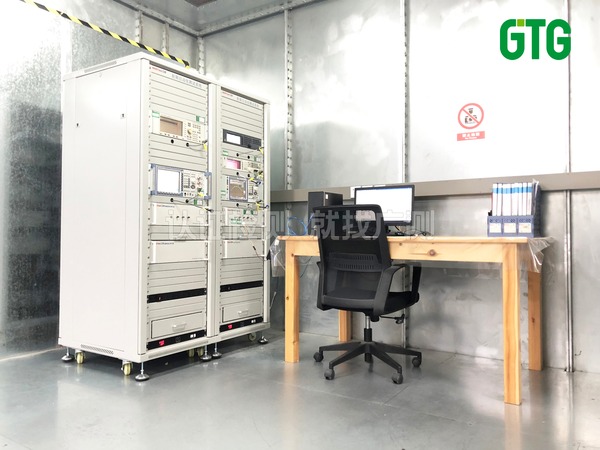
Multi-Mode EMC Testing and Camera-Specific Noise Sources
Camera EMC testing under EN 55032 and EN 55035 must cover all operational modes. The image sensor MIPI/LVDS high-speed data lanes operate at several hundred MHz to over 1 GHz, generating radiated emissions at the pixel clock fundamental and its harmonics. IR LED illumination introduces PWM-controlled LED driver noise in the 30-300 MHz band. Pan-tilt cameras add motor commutation noise during rotation — testing must capture both stationary and rotating states. Network data transmission via Ethernet or Wi-Fi adds processor and PHY noise to the emission profile. Camera multi-mode EMC testing strategy should sequence image capture, IR night vision, pan-tilt motion, and network streaming as distinct test configurations, reporting the worst-case results.
PoE-powered cameras require evaluation of the Ethernet isolation transformer's primary-to-secondary insulation under EN 62368-1. The PoE PD controller's classification signature and overload protection must be verified. The PoE input voltage (37-57 V DC) falls within the ES1/ES2 boundary depending on the specific implementation — the insulation coordination and touch current evaluation must reflect the actual PoE operating voltage.
Wireless Camera RED Integration and Multi-Market Strategy
Wi-Fi-enabled cameras must integrate CE-RED radio testing (ETSI EN 300 328 for 2.4 GHz) with the base EMC and LVD assessment. The camera's metal housing affects internal antenna performance — antenna gain must be measured with the camera fully assembled. Cameras using pre-certified Wi-Fi modules can reference the module's RED test data, but host-level radiated spurious emission verification is required. For manufacturers targeting global markets, camera EMC testing to EN 55032, FCC Part 15B, and ICES-003 can be consolidated into a single chamber session. Camera multi-standard CE FCC and ISED testing maximizes chamber utilization for international compliance.
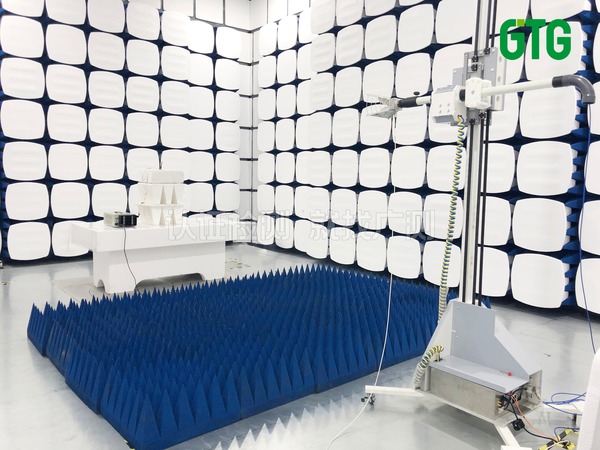
Frequently Asked Questions
Q1 How does IR illumination affect camera EMC emissions?
IR LED PWM drivers generate broadband emissions in the 30-300 MHz range. Emission levels with IR illumination active are typically higher than daytime mode. EMC testing must include both full-power and half-power IR modes to capture the complete emission profile.
Q2 Does a PoE camera require different LVD evaluation than a DC-powered camera?
Yes. The Ethernet transformer's reinforced insulation between the PoE input and camera circuitry must satisfy EN 62368-1 requirements. The PoE PD controller's classification, overload, and short-circuit behavior are additional LVD evaluation items not applicable to DC-powered cameras.
Q3 Can camera CE and FCC testing be combined?
Yes. EN 55032 and FCC Part 15B share common measurement methodology. A single chamber session captures data for both standards. Camera CE and FCC dual-standard EMC testing maximizes efficiency for manufacturers serving both markets.
Q4 What camera-specific factors affect CE certification cost?
Factors include pan-tilt functionality, IR illumination, PoE vs. DC power, integrated Wi-Fi, camera resolution grade, and product family scope. Multi-mode testing with motorized features increases chamber time compared to fixed cameras.
Q5 How should a camera product family be managed for CE certification?
Select the model with the highest image resolution and all features enabled as the principal test unit. Lower-specification models sharing the same platform can be covered through engineering assessment. Camera family CE certification planning should identify the representative model before testing begins.
This content is provided for industry communication and informational reference only and does not constitute any form of certification commitment, testing advice, or legal opinion. The certification requirements, procedures, and standards referenced herein may change as regulations evolve — please refer to the latest official announcements from the relevant authorities. Specific certification requirements, timelines, and costs must be evaluated by professional engineers based on the actual product. For inquiries, please contact us by phone.
Phone: +86 13925591357 | Email: net04@gtggroup.com | www.gtggroup.cn