

Contact information
Free service hotline
net04@gtggroup.com
TEL: 0769-85075888-6618
13925591357
Fax: 0769-85075898
Mail: net04@gtggroup.com
ADD: Huacan Industrial Park, No. 2 Keji 8th Road, Songshan Lake Park, Dongguan City, Guangdong Province
Keyboard FCC ID Certification Testing Guide and RF Compliance
FCC ID certification for wireless keyboards is the mandatory equipment authorization for Bluetooth and 2.4 GHz proprietary wireless keyboards entering the US market. Under FCC Part 15.247 (DTS), wireless keyboards must demonstrate compliance with conducted power, power spectral density, and spurious emission limits. Keyboards present a unique test configuration challenge: the close proximity of multiple keys and the user's hands during typing affects antenna performance, and the keyboard's USB receiver dongle must be addressed as part of the system certification. This guide provides a technical framework for wireless keyboard FCC ID certification, covering regulatory paths, body-effect antenna evaluation, SAR exemption analysis, and strategies for integrating keyboard and dongle certification.
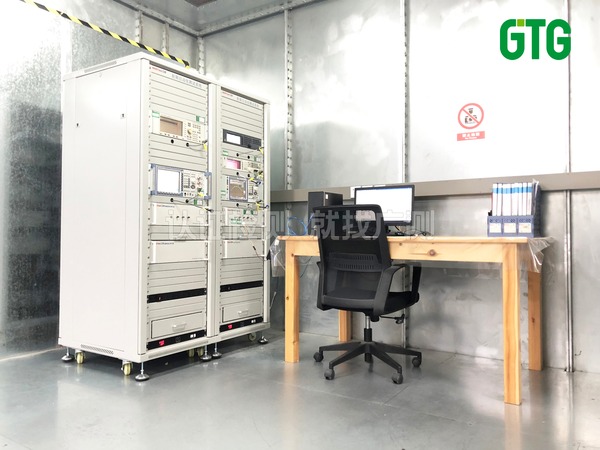
FCC Part 15.247 Testing and Antenna Body Effect
Wireless keyboards are tested under FCC Part 15.247 as DTS devices, with conducted output power limited to 1 W, power spectral density to 8 dBm per 3 kHz, and a minimum 6 dB bandwidth of 500 kHz. Bluetooth keyboards supporting both BR/EDR and BLE must be tested in each operating mode. Keyboards using proprietary 2.4 GHz protocols may alternatively follow Part 15.249 with field-strength-based limits of 50 mV/m at 3 meters, offering a simplified certification path for low-power designs.
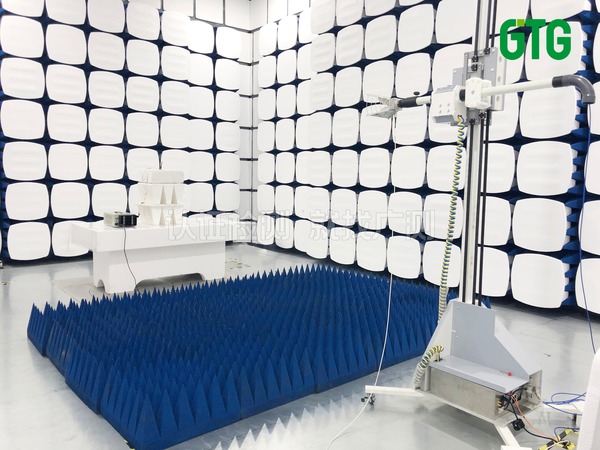
The keyboard antenna — typically a PCB trace antenna positioned along the top edge or under the top case — experiences body-effect detuning from the user's hands during typing. FCC testing should reflect this operational condition: antenna gain declared in the grant must be measured with the keyboard in a representative typing configuration. For mechanical keyboards with metal top plates or aluminum enclosures, the metal structure significantly affects antenna radiation patterns.Keyboard antenna body-effect FCC testing captures the real-world antenna performance that governs emission levels and SAR compliance.
SAR Exemption and Dongle Coordination
Wireless keyboards typically operate at Bluetooth Class 2 power levels (2.5 mW), qualifying for SAR test exemption through MPE calculation per KDB 447498. The keyboard-to-body separation under normal desk use exceeds 20 cm, further supporting the exemption. High-power gaming keyboards with Class 1 Bluetooth approaching 10 mW should undergo formal SAR exemption analysis with documented justification. The USB receiver dongle is included in the same FCC ID filing as the keyboard — if the dongle acts as a transceiver (transmitting acknowledgment packets), its transmitter parameters are tested alongside the keyboard. A receive-only dongle may not require separate transmitter authorization.
FCC and CE-RED radio testing share common measurement parameters across Part 15.247 and ETSI EN 300 328. A coordinated wireless keyboard FCC and RED joint testing program captures data for both certifications from a single RF test session.
Frequently Asked Questions
Q1 Can a keyboard and mouse share one FCC ID as a combo set?
Yes, if they are sold and certified as a combo set. Each device's transmitter is tested separately, and the test data is assembled under a single FCC ID filing. If the keyboard and mouse use the same receiver dongle, the dongle's compliance is covered under the same filing.
Q2 How does a mechanical keyboard's metal plate affect FCC testing?
The metal switch mounting plate acts as a ground plane that alters antenna impedance and radiation pattern. Mechanical keyboard metal-body FCC antenna testing must evaluate the antenna performance with the complete keyboard assembly, not just the PCB.
Q3 Is SAR testing required for wireless keyboards?
Most wireless keyboards are exempt from SAR testing because they operate at low power (Class 2 Bluetooth ~2.5 mW) and the keyboard-to-body distance exceeds 20 cm during normal use, qualifying as a mobile device. MPE calculation per KDB 447498 suffices for compliance demonstration.
Q4 Can pre-certified Bluetooth modules simplify keyboard FCC ID?
Yes. A keyboard integrating a pre-certified Bluetooth module can reference the module's grant. Host-level testing requires radiated spurious emission verification in the keyboard enclosure and antenna performance assessment under typing conditions.
Q5 What design changes trigger keyboard FCC recertification?
Changes to the antenna, antenna matching, enclosure material, or addition of metal features near the antenna trigger keyboard FCC design change review. Implementation of new wireless protocols also requires assessment.
This content is provided for industry communication and informational reference only and does not constitute any form of certification commitment, testing advice, or legal opinion. The certification requirements, procedures, and standards referenced herein may change as regulations evolve — please refer to the latest official announcements from the relevant authorities. Specific certification requirements, timelines, and costs must be evaluated by professional engineers based on the actual product. For inquiries, please contact us by phone.
Phone: +86 13925591357 | Email: net04@gtggroup.com | www.gtggroup.cn