

Contact information
Free service hotline
net04@gtggroup.com
TEL: 0769-85075888-6618
13925591357
Fax: 0769-85075898
Mail: net04@gtggroup.com
ADD: Huacan Industrial Park, No. 2 Keji 8th Road, Songshan Lake Park, Dongguan City, Guangdong Province
Smart Lock CE-RED Certification Guide and Multi-Radio Compliance
CE-RED certification for smart locks is the mandatory regulatory requirement for Wi-Fi, Bluetooth, Zigbee, Thread, and NFC-enabled door locks entering the European market. Smart locks present a distinctive certification challenge: the metallic door installation environment fundamentally affects antenna performance, battery-powered operation constrains RF performance, and the electromechanical lock mechanism introduces unique safety assessment requirements under EN 62368-1. This guide provides a structured framework for smart lock CE-RED compliance, addressing multi-radio testing methodology, metal-door antenna evaluation, battery safety and lock mechanism assessment, and practical strategies for coordinating EU and US market certification.
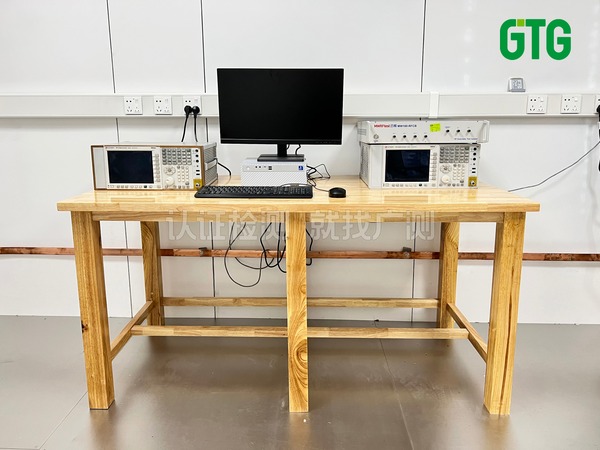
Multi-Radio RED Testing and Metal Door Installation Effects
Smart locks commonly integrate Bluetooth (for smartphone proximity unlocking), Wi-Fi (for remote management via bridge), and NFC (for access cards and smartphone tap-to-unlock). Under CE-RED, Bluetooth and Wi-Fi 2.4 GHz are tested per ETSI EN 300 328, covering transmitter power, frequency error, occupied bandwidth, spurious emissions, and receiver blocking. NFC operates under ETSI EN 300 330 at 13.56 MHz with carrier stability and field strength limits. Zigbee and Thread-based locks add EN 300 328 testing for the 2.4 GHz IEEE 802.15.4 radio. Multi-radio coexistence testing — all radios operating simultaneously — must verify that aggregate emissions remain within limits and that no radio's performance degrades unacceptably due to mutual interference within the lock enclosure.
The metal door installation is the defining factor in smart lock RF performance. Mounted on a steel security door, the metal surface acts as a large reflective ground plane that redirects the antenna radiation pattern and shifts the antenna's resonant frequency. CE-RED testing must replicate the installed condition: the lock is mounted on a representative metal plate matching typical door thickness and material, and all antenna measurements are conducted in this configuration. Antenna gain values declared in the RED technical file must reflect installed-condition performance, not free-space values. Smart lock metal-door RF installation testing is fundamental to demonstrating real-world RED compliance.
Battery Safety, Lock Mechanism, and Multi-Market Strategy
Battery safety evaluation under RED Article 3.1a (health and safety) references EN 62368-1 Annex M for the lock's battery compartment — typically 4× or 8× AA alkaline cells or a rechargeable lithium pack. The assessment covers reverse polarity protection, short-circuit behavior, and electrolyte leakage containment. The electromechanical lock mechanism introduces a safety assessment unique to smart locks: the motor or solenoid driving the deadbolt must be evaluated for stalled-rotor conditions (bolt jammed) — the drive circuit must limit current or time out to prevent overheating, and winding temperature under sustained stall must remain within the insulation system rating.
For manufacturers targeting both EU and US markets, a coordinated certification program is recommended. FCC Part 15.247 and ETSI EN 300 328 share common RF measurement methodology; NFC's FCC Part 15.225 and ETSI EN 300 330 are similarly aligned. Smart lock FCC and CE-RED joint certification structured as a single coordinated program reduces total certification time and cost for dual-market access.
Frequently Asked Questions
Q1 Does a smart lock with Wi-Fi and Bluetooth require separate RED modules?
No. The smart lock is certified as a single product under RED. All radio technologies are tested individually and the results compiled into one RED technical file and one EU Declaration of Conformity. Pre-certified radio modules can be referenced to reduce the testing scope.
Q2 How is the metal door effect replicated in laboratory testing?
The lock is mounted on a steel plate of representative thickness (1.5–2 mm) and size (minimum 500 × 500 mm) to simulate a typical security door. The plate is grounded or floating per the lock's installation instructions. All RF measurements are conducted with the lock installed on this plate. The plate dimensions and material must be documented in the test report.
Q3 What safety standards apply to the smart lock electronic deadbolt?
EN 62368-1 applies to the electrical safety of the lock mechanism. The deadbolt motor's stall current, winding temperature under sustained stall, and protection circuit timeout behavior are evaluated. Mechanical durability and forced entry resistance are not covered by RED or LVD — these are addressed by mechanical security standards such as EN 14846 (electromechanical locks) tested separately.
Q4 Can smart lock CE-RED and FCC testing be combined?
Yes. Radio testing for EN 300 328 and FCC Part 15.247 share common methodology. A single RF test session can generate data for both certifications. Smart lock RED and FCC combined RF testing maximizes test efficiency for dual-market products.
Q5 What firmware changes trigger smart lock CE-RED recertification?
Changes to RF output power settings, modulation parameters, or radio duty cycle trigger RED recertification assessment. Smart lock RED certification change management should evaluate firmware updates for RF compliance impact.
This content is provided for industry communication and informational reference only and does not constitute any form of certification commitment, testing advice, or legal opinion. The certification requirements, procedures, and standards referenced herein may change as regulations evolve — please refer to the latest official announcements from the relevant authorities. Specific certification requirements, timelines, and costs must be evaluated by professional engineers based on the actual product. For inquiries, please contact us by phone.
Phone: +86 13925591357 | Email: net04@gtggroup.com | www.gtggroup.cn