

Contact information
Free service hotline
net04@gtggroup.com
TEL: 0769-85075888-6618
13925591357
Fax: 0769-85075898
Mail: net04@gtggroup.com
ADD: Huacan Industrial Park, No. 2 Keji 8th Road, Songshan Lake Park, Dongguan City, Guangdong Province
Mouse FCC ID Certification Testing Guide and SAR Exemption
FCC ID certification for wireless mice — including Bluetooth mice, 2.4 GHz proprietary wireless mice, and dual-mode gaming mice — is the mandatory equipment authorization for radio-enabled computer peripherals entering the US market. Wireless mice operate under FCC Part 15.247 (DTS) or Part 15.249 (low-power transmitters), with the palm-contact usage condition creating specific considerations for SAR exemption evaluation and antenna body-effect assessment. This guide provides a technical framework for wireless mouse FCC ID certification, covering regulatory path selection, RF test methodology, SAR exemption criteria, and coordination with the USB receiver dongle certification.
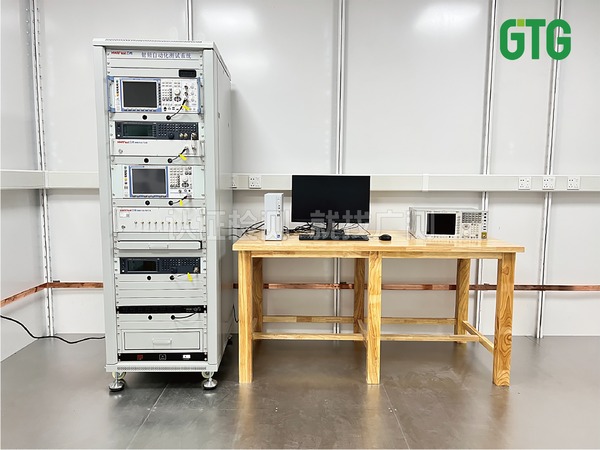
FCC Regulatory Path Selection and RF Testing for Wireless Mice
Bluetooth mice are certified under FCC Part 15.247 DTS, with conducted output power limited to 1 W (30 dBm). For classic Bluetooth BR/EDR and BLE modes, the minimum 6 dB bandwidth must exceed 500 kHz, and the power spectral density must not exceed 8 dBm per 3 kHz. 2.4 GHz proprietary wireless mice using GFSK or FSK modulation may apply for certification under Part 15.247 or Part 15.249. Part 15.249 specifies field strength limits of 50 mV/m at 3 meters for fundamental emissions, with harmonics limited to 500 μV/m. The Part 15.249 path avoids the DTS bandwidth requirement but imposes tighter output power constraints.
The mouse antenna — typically a PCB trace or chip antenna positioned at the front or top of the body — experiences detuning and gain reduction when the user's hand covers the mouse during normal operation. FCC testing should reflect this body-worn condition: antenna gain declared in the grant must represent performance under actual grip conditions. The mouse must be tested while active (button presses or cursor movement simulated), and the test report should document the grip simulator or hand phantom used. Wireless mouse body-worn RF performance testing captures the antenna behavior that governs real-world emission levels.
SAR Exemption and Dongle Certification Coordination
Most Bluetooth and 2.4 GHz wireless mice operate at power levels well below 10 mW (Class 2 Bluetooth at 2.5 mW typical), placing them within the SAR test exemption threshold per KDB 447498 when antenna-to-skin distance exceeds 5 mm. A Maximum Permissible Exposure calculation can substitute for SAR measurement for these low-power devices. High-performance gaming mice with Class 1 Bluetooth (approaching 10 mW) and thinner enclosures may require a more detailed SAR exemption analysis. The exemption justification must be documented in the FCC filing with power measurements and distance calculations.
The USB receiver dongle paired with the mouse is typically included in the same FCC ID certification. If the dongle operates as a transceiver (transmitting acknowledgment packets back to the mouse), it is tested as part of the system. A dongle that functions as a receive-only device (Bluetooth dongle with no transmission) may not require separate transmitter authorization. Coordinated mouse and dongle FCC ID certification as a single system streamlines the application process and avoids fragmented documentation.
Frequently Asked Questions
Q1 Can a mouse using a pre-certified Bluetooth SoC skip module-level FCC testing?
Yes. If the Bluetooth SoC has a chip-level or module-level FCC grant, the mouse manufacturer can reference that grant. Host-level testing must verify integration compliance — radiated spurious emissions with the SoC in the mouse enclosure and antenna performance verification under grip conditions. Mouse Bluetooth SoC integration FCC testing reduces the certification scope compared to full module-level testing.
Q2 How does Part 15.249 differ from Part 15.247 for wireless mice?
Part 15.249 offers a simpler certification path with field-strength-based limits (50 mV/m at 3m) rather than conducted power limits tied to DTS requirements. However, the effective radiated power under Part 15.249 is generally lower than Part 15.247, making it suitable for low-power proprietary wireless mice. Part 15.247 is the standard path for Bluetooth mice supporting frequency hopping and digital modulation.
Q3 Is SAR testing required for wireless gaming mice?
For most gaming mice, SAR testing is exempted through MPE calculation because conducted power is below the 10 mW exemption threshold per KDB 447498, and antenna-to-palm distance typically exceeds 5 mm. Gaming mice with Class 1 Bluetooth operating near 10 mW and with thin palm-contact surfaces should undergo a thorough SAR exemption analysis with documented justification in the filing.
Q4 Can FCC and CE-RED testing for a wireless mouse be combined?
Yes. RF test parameters — output power, spurious emissions, frequency error, and occupied bandwidth — overlap significantly between FCC Part 15.247 and ETSI EN 300 328. A single chamber session can generate data for both certifications. Mouse FCC and RED joint RF testing maximizes test efficiency.
Q5 What design changes to a wireless mouse require FCC recertification?
Changes to the antenna design, antenna matching network, RF output power settings, enclosure material near the antenna, and PCB layout affecting the RF section trigger Class II permissive change assessment. Wireless mouse FCC design change compliance review should evaluate each revision for recertification triggers.
This content is provided for industry communication and informational reference only and does not constitute any form of certification commitment, testing advice, or legal opinion. The certification requirements, procedures, and standards referenced herein may change as regulations evolve — please refer to the latest official announcements from the relevant authorities. Specific certification requirements, timelines, and costs must be evaluated by professional engineers based on the actual product. For inquiries, please contact us by phone.
Phone: +86 13925591357 | Email: net04@gtggroup.com | www.gtggroup.cn