

Contact information
Free service hotline
net04@gtggroup.com
TEL: 0769-85075888-6618
13925591357
Fax: 0769-85075898
Mail: net04@gtggroup.com
ADD: Huacan Industrial Park, No. 2 Keji 8th Road, Songshan Lake Park, Dongguan City, Guangdong Province
Router FCC Certification EMC Testing Requirements and Compliance Guide
FCC certification for routers presents a dual-path compliance challenge: as digital devices, routers must satisfy FCC Part 15 Subpart B SDOC requirements for unintentional radiator EMC; and as wireless transmitters, the integrated Wi-Fi radios require FCC ID equipment authorization under Part 15 Subpart C (15.247 for 2.4 GHz, 15.407 for 5 GHz). Modern Wi-Fi 6/6E/7 routers with multi-band, multi-antenna, and mesh networking capabilities create a complex EMC and radio testing environment. This article provides a structured guide to router FCC certification, covering the dual-path regulatory framework, multi-port conducted emission testing, multi-antenna radiated testing methodology, and practical strategies for coordinating router FCC, CE-RED, and ISED certification.
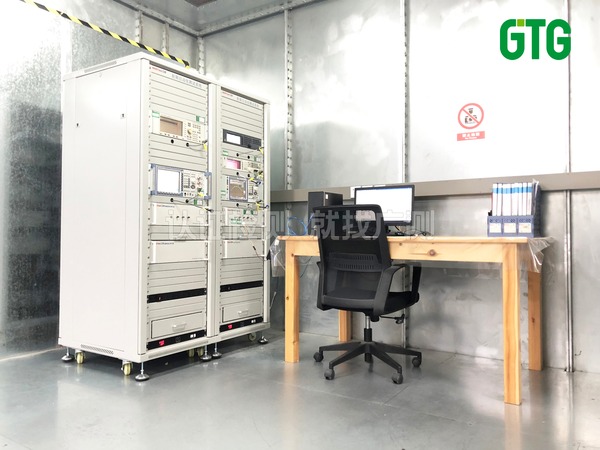
Router FCC Dual-Path: SDOC and FCC ID Framework
A router's FCC compliance follows two parallel paths: FCC Part 15 Subpart B SDOC for the digital device (covering conducted and radiated emissions from the processor, Ethernet switch, and power supply), and FCC Part 15 Subpart C FCC ID certification for the Wi-Fi transmitter functions. The SDOC path requires testing at an FCC-recognized laboratory and maintenance of test records. The FCC ID path requires filing through a TCB with a grant of equipment authorization. For consumer routers sold through retail channels, Class B SDOC limits apply; for enterprise and carrier-grade routers, Class A limits are permitted.
Router EMC testing faces the challenge of multiple Ethernet ports: a typical consumer router has one WAN port and four LAN ports, while enterprise routers may have dozens of ports. The test configuration must connect a representative number of ports with terminated cables — typically all WAN ports and a representative subset of LAN ports carrying live data traffic. Ethernet PHY chips operating at 1 Gbps or higher generate broadband conducted and radiated noise in the 30–300 MHz range through the unshielded twisted pair cables. Router multi-port EMC test configuration should be documented and agreed upon with the test laboratory before formal testing.
Multi-Band Wi-Fi Radio Testing and International Coordination
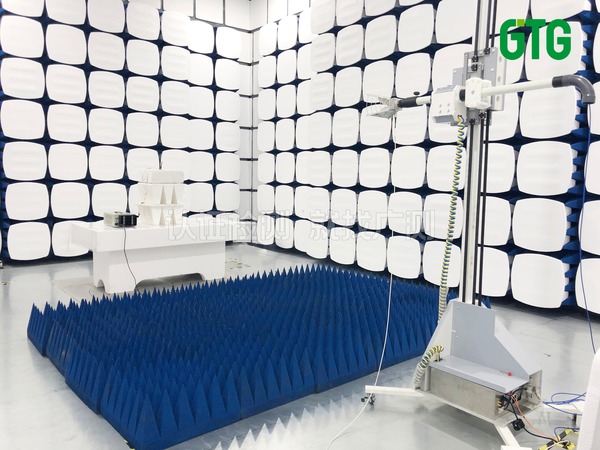
Router FCC ID certification for Wi-Fi radios covers 2.4 GHz (Part 15.247) and 5 GHz (Part 15.407). Wi-Fi 6E routers operating in the 6 GHz band (5.925–7.125 GHz) face additional requirements under the new Part 15.407 subparts, including Automated Frequency Coordination for standard-power access points. Multi-antenna routers using beamforming, MIMO, and MU-MIMO must test each antenna chain independently and in combined modes. The transmitter power limits vary by band, modulation bandwidth, and antenna configuration — KDB 662911 provides guidance for directional gain calculation in MIMO systems.
FCC, CE-RED (ETSI EN 300 328/EN 301 893), and ISED (RSS-247/RSS-248) radio testing share common measurement methodology. A coordinated router multi-standard FCC CE and ISED test program captures data for all three regulatory frameworks from a single RF test campaign, minimizing total chamber time and certification cost for manufacturers targeting the US, EU, and Canadian markets simultaneously.
Frequently Asked Questions
Q1 Does a wired-only router require FCC ID certification?
No. A wired-only router without any wireless radios is classified as an unintentional radiator under FCC Part 15 Subpart B and follows the SDOC procedure only. No FCC ID is required. Wireless routers with Wi-Fi radios require both SDOC and FCC ID.
Q2 How does Wi-Fi 6E affect router FCC certification?
Wi-Fi 6E routers operating in the 6 GHz band must comply with Part 15.407 subpart requirements, including AFC for standard-power indoor/outdoor access points. The 6 GHz radio must be tested across its operating channels, and the AFC client must demonstrate communication with an AFC system. Low-power indoor-only 6E access points have simplified requirements but must implement geolocation-based power restrictions.
Q3 Can a mesh router system be certified under a single FCC ID?
If all mesh nodes share identical hardware and radio configuration, they can be covered under a single FCC ID with one node as the representative test unit. If mesh nodes have different radio configurations (e.g., main router with tri-band vs. satellite node with dual-band), each distinct radio configuration requires separate evaluation. The mesh backhaul link must be tested with representative node-to-node spacing.
Q4 What is the recommended approach for router family FCC certification?
The highest-specification model with all radios and maximum antenna count should serve as the principal test unit. Lower-tier models can be covered through engineering assessment. Different radio chipset platforms require independent full testing. Router family FCC certification planning should identify the representative model before testing begins.
Q5 How does router FCC DFS testing work for 5 GHz DFS channels?
Routers operating as master devices in UNII-2A and UNII-2C bands must pass DFS radar detection testing per KDB 905462. The router must detect simulated radar pulses, cease transmission on the affected channel within the Channel Move Time, and not return to the channel for the Non-Occupancy Period. DFS testing requires specialized radar signal generators and is an additional test item beyond standard radio testing.
This content is provided for industry communication and informational reference only and does not constitute any form of certification commitment, testing advice, or legal opinion. The certification requirements, procedures, and standards referenced herein may change as regulations evolve — please refer to the latest official announcements from the relevant authorities. Specific certification requirements, timelines, and costs must be evaluated by professional engineers based on the actual product. For inquiries, please contact us by phone.
Phone: +86 13925591357 | Email: net04@gtggroup.com | www.gtggroup.cn