

Contact information
Free service hotline
net04@gtggroup.com
TEL: 0769-85075888-6618
13925591357
Fax: 0769-85075898
Mail: net04@gtggroup.com
ADD: Huacan Industrial Park, No. 2 Keji 8th Road, Songshan Lake Park, Dongguan City, Guangdong Province
Bluetooth Module BQB Certification Application Guide and Qualification Process
Bluetooth Qualification (BQB) is a mandatory certification process administered by the Bluetooth Special Interest Group for any product incorporating Bluetooth technology and using the Bluetooth trademark. For Bluetooth module manufacturers — whether producing standalone wireless modules for OEM integration or embedded Bluetooth solutions for IoT devices — BQB certification is both a technical compliance requirement and a commercial enabler: qualified products are listed in the Bluetooth SIG Launch Studio database, and the module's Qualification Design Identification enables downstream integrators to reference the module qualification without repeating full testing. This guide provides a practical framework for Bluetooth module BQB certification, covering the qualification process, required test categories, the QDID referencing system for OEM integrators, and strategies for maintaining qualification across firmware updates and hardware revisions.
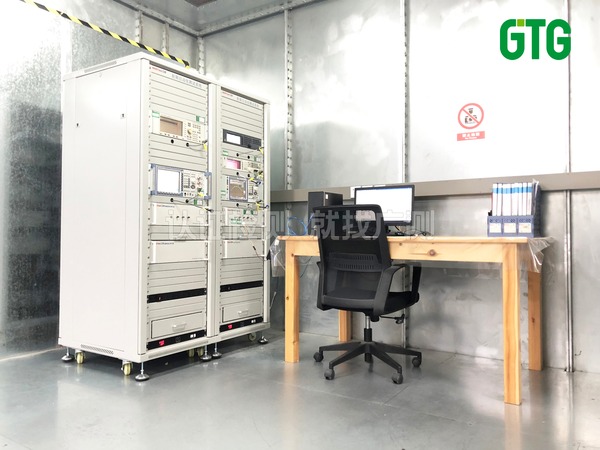
Bluetooth Qualification Framework and Test Requirements
Bluetooth qualification is structured around the Bluetooth Core Specification version and the supported profiles and protocols. A Bluetooth module supporting Bluetooth 5.4 with LE Audio, for example, must demonstrate compliance with the Core Specification requirements for the Link Layer and RF PHY layers, as well as the Generic Access Profile and any additional profiles the module declares support for. The qualification process uses the Bluetooth SIG's Launch Studio platform, where the applicant creates a qualification project, lists the Bluetooth design components, declares the applicable test suites, and submits test evidence.
Test requirements fall into two categories: RF PHY testing and protocol conformance testing. RF PHY testing verifies the module's transmitter and receiver performance against the Bluetooth RF test specification — key parameters include output power, frequency accuracy, modulation characteristics, receiver sensitivity, and blocking performance. Protocol conformance testing verifies that the module's Link Layer, L2CAP, and higher-layer protocol implementations conform to the Bluetooth specification. Test evidence can come from testing at a Bluetooth Recognized Test Facility or from the module's Bluetooth controller chip vendor — many Bluetooth chip vendors provide pre-qualified component listings that the module manufacturer can reference, reducing the testing burden.
QDID Referencing and OEM Integration Strategy
A key commercial value of Bluetooth module BQB certification is the QDID referencing system. Once a module obtains its QDID, downstream OEM integrators — manufacturers of smart home devices, wearables, medical devices, or industrial sensors incorporating the module — can reference the module's QDID in their own Bluetooth qualification. This means the integrator's product qualification can focus on the application-level profiles and services they add, without repeating the module-level RF PHY and protocol testing. The time and cost savings for integrators make QDID-referenced modules significantly more attractive in the marketplace.
For module manufacturers, maintaining qualification currency requires attention to two triggers: Bluetooth Specification version updates — when the Bluetooth SIG releases a new Core Specification version, modules declaring support for the new version must update their qualification; and design changes — changes to the RF section (antenna matching, output power settings, crystal frequency) may require RF PHY retesting, while firmware changes affecting protocol behavior may require protocol retesting. A Bluetooth module BQB qualification management system tracks these triggers and schedules qualification updates to maintain continuous compliance for all referenced integrator products.
Frequently Asked Questions
Q1 What is the difference between BQB qualification and FCC/CE certification?
BQB is a Bluetooth technology compliance certification administered by the Bluetooth SIG — it verifies interoperability with the Bluetooth standard and is required to use the Bluetooth trademark. FCC and CE are regulatory certifications verifying compliance with radio frequency emission and safety regulations. They serve different purposes: BQB is about Bluetooth standard conformance; FCC/CE are about regulatory compliance. All three are typically required for a Bluetooth product sold in global markets.
Q2 Can a module manufacturer reference the chip vendor's qualification data?
Yes. Bluetooth chip vendors typically provide a pre-qualified Bluetooth component listing in the Launch Studio database. The module manufacturer can reference the chip-level qualification as a component of their module design, reducing the testing scope to module-level additions — typically the RF PHY performance with the module's specific antenna and matching network, and any protocol profiles implemented in the module's firmware beyond what the chip vendor qualified.
Q3 How long does a Bluetooth module QDID remain valid?
A BQB qualification does not expire — once a design is qualified against a specific Core Specification version, the QDID remains valid indefinitely for that version. However, if the Bluetooth SIG withdraws a Core Specification version (typically after a transition period when a newer version is released), new qualifications cannot be created against the withdrawn version, and existing qualifications may need updating to maintain trademark usage rights. Module manufacturers should monitor Bluetooth SIG version deprecation announcements.
Q4 What testing is required for a Bluetooth module supporting multiple PHYs?
Each PHY mode — LE 1M, LE 2M, LE Coded (S2 and S8), and BR/EDR if supported — requires separate RF PHY testing for transmitter and receiver parameters. The test plan must cover all declared PHY modes at the lowest, middle, and highest operating frequencies. Modules supporting LE Audio additionally require testing of the Isochronous Channels feature set.
Q5 How should a Bluetooth module manufacturer coordinate BQB with FCC and CE certification?
RF testing for BQB, FCC, and CE shares common test parameters — output power, frequency accuracy, and spurious emissions are measured across all three programs. A coordinated Bluetooth module BQB FCC and CE joint testing program can capture data for all three from a single RF test session, with separate documentation packages for each certification body. This approach reduces total testing time and cost.
This content is provided for industry communication and informational reference only and does not constitute any form of certification commitment, testing advice, or legal opinion. The certification requirements, procedures, and standards referenced herein may change as regulations evolve — please refer to the latest official announcements from the relevant authorities. Specific certification requirements, timelines, and costs must be evaluated by professional engineers based on the actual product. For inquiries, please contact us by phone.
Phone: +86 13925591357 | Email: net04@gtggroup.com | www.gtggroup.cn