

Contact information
Free service hotline
net04@gtggroup.com
TEL: 0769-85075888-6618
13925591357
Fax: 0769-85075898
Mail: net04@gtggroup.com
ADD: Huacan Industrial Park, No. 2 Keji 8th Road, Songshan Lake Park, Dongguan City, Guangdong Province
Speaker CE-RED Certification Application Guide and Multi-Mode Radio Testing
CE-RED certification under the Radio Equipment Directive (2014/53/EU) is the mandatory conformity requirement for wireless speakers entering the European market. Modern wireless speakers — whether portable Bluetooth speakers, Wi-Fi multi-room audio systems, or smart speakers with voice assistant integration — each present distinct compliance challenges across ETSI harmonized radio standards, EMC testing per EN 55032/EN 55035, and safety evaluation per EN 62368-1. This guide provides a practical framework for speaker CE-RED compliance, addressing radio testing methodology for single-mode and multi-mode devices, audio amplifier EMC considerations, and efficient integration of RED, EMC, and safety testing into a coordinated certification campaign.
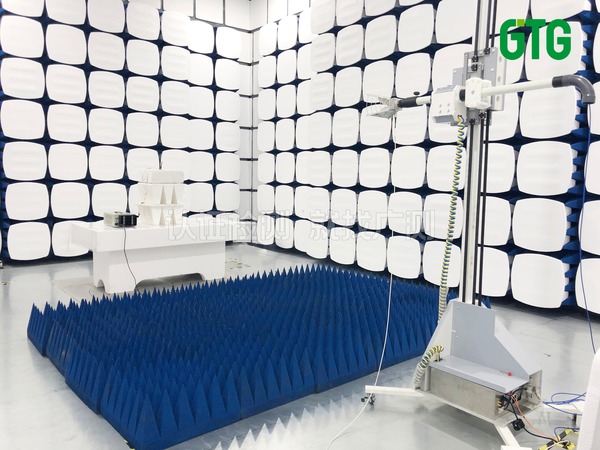
Radio Testing Framework for Wireless Speakers
The applicable ETSI harmonized standard depends on the speaker's wireless technology mix. Bluetooth-only speakers operating in the 2.4 GHz ISM band (2402–2480 MHz) fall under ETSI EN 300 328, which covers transmitter power, frequency error, occupied bandwidth, spurious emissions, and receiver blocking. Wi-Fi-enabled speakers — increasingly common in multi-room audio systems — add EN 300 328 (2.4 GHz) or EN 301 893 (5 GHz) to the test scope. Smart speakers with integrated voice assistants that include 802.15.4-based protocols (such as Thread for Matter smart home interoperability) may additionally trigger EN 300 328 or dedicated short-range device standards depending on the operating frequency and modulation scheme.
For multi-mode speakers supporting simultaneous Bluetooth and Wi-Fi operation, radio coexistence testing is required — both radios operating concurrently — to verify that aggregate emissions remain within regulatory limits and that neither radio's performance degrades below standard minimum requirements due to mutual interference within the product enclosure. The test plan must document which radio modes are tested simultaneously and justify the selection of worst-case operating configurations.
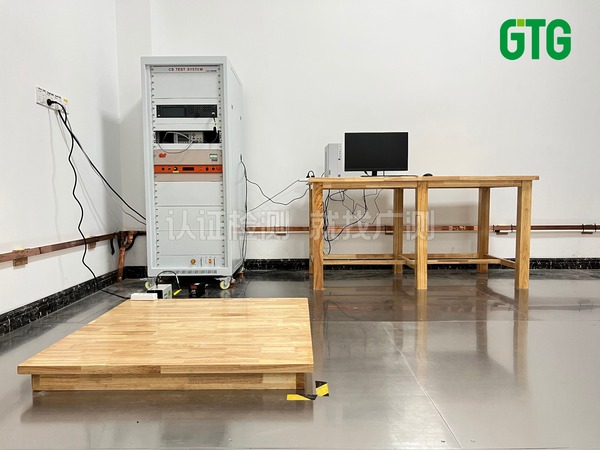
EMC and Safety Integration for Speaker CE-RED Compliance
Beyond radio testing, the speaker must satisfy the essential requirements of RED Article 3.1b — electromagnetic compatibility — demonstrated through compliance with EN 55032 (emission) and EN 55035 (immunity). Speakers present unique EMC characteristics: the audio amplifier's Class-D switching stage operates at several hundred kilohertz, generating conducted and radiated emissions that add to the radio module's digital noise. The amplifier's power supply decoupling and output LC filter design are critical to controlling broadband emissions that can mask the radio module's spurious measurements. EMC testing must be performed with the speaker in active audio playback mode — not in standby — as the amplifier's switching activity contributes significantly to the overall emission profile.
Safety evaluation under EN 62368-1 for speakers addresses the built-in battery (for portable speakers), the AC-DC power adapter or internal power supply (for mains-powered units), and the speaker driver's magnetic assembly. Portable speakers with lithium-ion batteries require evaluation of battery charging safety, overcharge protection, and short-circuit behavior. For manufacturers targeting multiple markets, speaker CE-RED and FCC joint certification can be structured around a single radio test session configured to capture data for ETSI, FCC Part 15, and Canada ISED requirements, with separate documentation packages for each regulatory authority.
Frequently Asked Questions
Q1 Does a Bluetooth-only speaker require Notified Body involvement for CE-RED?
For Bluetooth-only speakers that fully apply the harmonized standard EN 300 328 and operate within its defined scope, the manufacturer may use self-declaration (Module A) without mandatory Notified Body involvement. However, many manufacturers opt for voluntary third-party testing to strengthen the credibility of the technical file. If the speaker incorporates proprietary wireless protocols not fully covered by harmonized standards, Notified Body assessment becomes mandatory.
Q2 How does the Class-D amplifier affect speaker EMC testing?
The Class-D amplifier's PWM switching frequency and its harmonics appear in both conducted and radiated emission spectra. Speaker EMC testing must be performed with audio playback at representative output levels, as the amplifier's switching noise changes with output power and modulation depth. Conducted emission peaks from the amplifier can mask or combine with radio module noise, complicating root-cause analysis during troubleshooting. Pre-compliance scanning with the amplifier operating at multiple volume levels helps identify the noise contribution from each source.
Q3 What is required for portable speaker battery safety under CE-RED?
Battery safety is evaluated under RED Article 3.1a (health and safety), referencing EN 62368-1. The evaluation covers battery cell certification (IEC 62133), charging circuit protection against overcharge and over-discharge, short-circuit protection at the battery terminals, and thermal management during charging at maximum rated ambient temperature. Portable speakers with user-replaceable batteries must additionally address the risk of incorrect battery insertion and the use of third-party replacement cells.
Q4 Can a speaker using a pre-certified Bluetooth module skip radio testing?
Not entirely. While the module's test data supports the CE-RED technical file, the host speaker must demonstrate that integration does not compromise module conformity. Minimum host-level testing includes spurious emission measurement with the module in the speaker enclosure, verification that the antenna configuration matches the module's certified configuration, and conducted emission testing on the speaker's AC mains input. The extent of additional testing depends on how closely the host integration replicates the module's certification test setup.
Q5 How should a speaker manufacturer plan CE-RED across a product family with different wireless configurations?
The recommended approach is to select the model with the maximum radio configuration as the representative sample for full testing, with lower-tier models covered through engineering assessment. The technical file must document the rationale for test reduction and demonstrate that the tested model bounds the worst-case conditions for all family members. Speaker family RED certification planning with an experienced TCB streamlines the family approval process.
This content is provided for industry communication and informational reference only and does not constitute any form of certification commitment, testing advice, or legal opinion. The certification requirements, procedures, and standards referenced herein may change as regulations evolve — please refer to the latest official announcements from the relevant authorities. Specific certification requirements, timelines, and costs must be evaluated by professional engineers based on the actual product. For inquiries, please contact us by phone.
Phone: +86 13925591357 | Email: net04@gtggroup.com | www.gtggroup.cn