

Contact information
Free service hotline
net04@gtggroup.com
TEL: 0769-85075888-6618
13925591357
Fax: 0769-85075898
Mail: net04@gtggroup.com
ADD: Huacan Industrial Park, No. 2 Keji 8th Road, Songshan Lake Park, Dongguan City, Guangdong Province
Wi-Fi Module FCC ID Certification Testing Requirements and Compliance Strategy
Wi-Fi module FCC ID certification is the mandatory equipment authorization procedure for any Wi-Fi-enabled module intended for sale or use in the United States. Governed by FCC Part 15.247 (2.4 GHz band) and FCC Part 15.407 (5 GHz band), with testing conducted in accordance with ANSI C63.10 and KDB guidance documents, the certification process verifies that the module's radio frequency emissions, spectral efficiency, and operational parameters conform to regulatory limits. This article provides a technical analysis of the FCC ID testing framework for Wi-Fi modules, covering the regulatory structure, core RF parameters, module integration compliance, and practical certification strategies for module vendors.
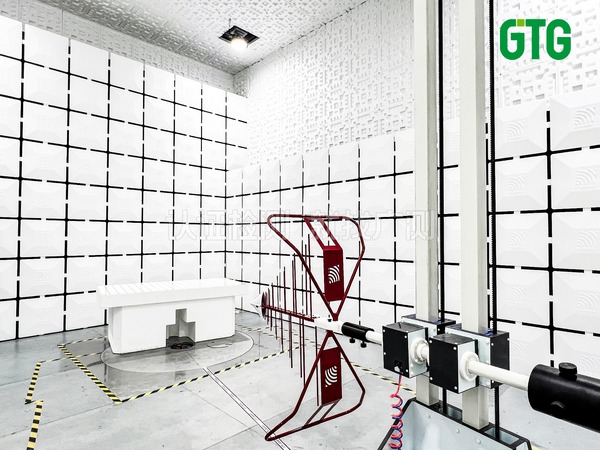
FCC Regulatory Framework for Wi-Fi Modules
FCC Part 15.247 governs digital modulation systems operating in the 902–928 MHz, 2400–2483.5 MHz, and 5725–5850 MHz bands. Wi-Fi modules operating in the 2.4 GHz ISM band (2412–2462 MHz for 802.11b/g/n or up to 2484 MHz for 802.11ax 40 MHz channels) are classified as Digital Transmission Systems under Section 15.247(a)(2), requiring a minimum 6 dB bandwidth of at least 500 kHz. FCC Part 15.407 governs Unlicensed National Information Infrastructure devices in the 5.15–5.25 GHz (UNII-1), 5.25–5.35 GHz (UNII-2A), 5.47–5.725 GHz (UNII-2C), and 5.725–5.85 GHz (UNII-3) bands. Each sub-band carries distinct power limits and operational constraints — most critically, devices in UNII-1 and UNII-2A bands must limit emissions in the 5.15–5.35 GHz range to indoor-only operation unless they implement Dynamic Frequency Selection and Transmit Power Control per the requirements of KDB 594280 and KDB 905462.
Wi-Fi modules supporting Wi-Fi 6E (6 GHz band, 5925–7125 MHz) operating under the new Part 15.407 subpart requirements face additional constraints including Automated Frequency Coordination and geolocation-based power management — an evolving regulatory area that module designers should monitor through FCC proceedings.
Core RF Test Parameters and Measurement Methodology
FCC ID testing for Wi-Fi modules encompasses a defined set of RF measurements, each with specific test configurations and pass/fail criteria derived from the applicable rule part and KDB guidance.
Conducted Output Power: Measured at the antenna port or, for modules with integrated antennas, derived from radiated measurements per KDB 412172. For 2.4 GHz DTS systems, the limit is 1 W (30 dBm) conducted. For 5 GHz UNII devices, limits vary by sub-band: 1 W for UNII-1 and UNII-3, 250 mW (24 dBm) for UNII-2A and UNII-2C without TPC, or 1 W with TPC enabled per Part 15.407(a). Power measurements must be performed at the lowest, middle, and highest channels within each operating band, using the data rate and modulation scheme producing the highest output power.
Power Spectral Density: PSD is measured within any 3 kHz band during any time interval of continuous transmission. For 2.4 GHz DTS, the limit is 8 dBm per 3 kHz. For 5 GHz devices, the limit ranges from 11 dBm/MHz to 30 dBm/500 kHz depending on the sub-band and device category. PSD is particularly relevant for OFDM-based Wi-Fi signals where spectral energy is distributed across subcarriers.
6 dB and 26 dB Bandwidth: For 2.4 GHz DTS, the 6 dB bandwidth must exceed 500 kHz. For 5 GHz devices, the 26 dB emission bandwidth is measured to define the occupied bandwidth for band-edge compliance. For Wi-Fi 6 (802.11ax) modules supporting OFDMA and 20/40/80 MHz channels, bandwidth measurements must be performed for each supported channel bandwidth configuration.
Band-Edge Compliance and Spurious Emissions: Radiated spurious emissions must be measured from 30 MHz up to the 10th harmonic of the highest fundamental frequency — for 5.8 GHz band, this extends to 40 GHz. KDB 789033 specifies measurement procedures, and KDB 558074 provides guidance on using the marker-delta method for band-edge measurements of DTS devices. Out-of-band emissions in restricted bands must comply with the general limits in Part 15.209.
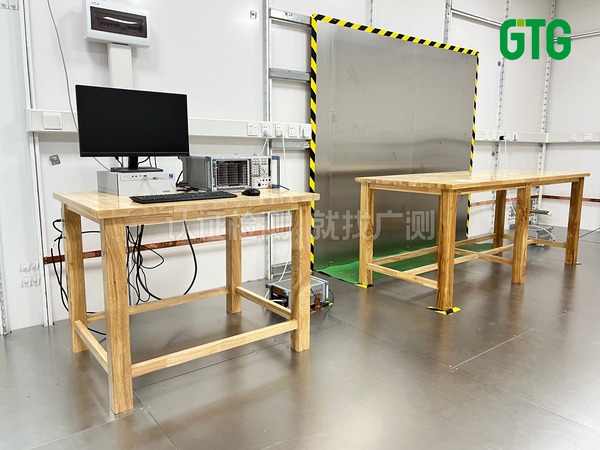
Module Integration Compliance and Host Device Responsibilities
A Wi-Fi module authorized under a single-modular grant can be integrated into host devices without requiring a new FCC ID for the transmitter function, provided the integration adheres to the conditions documented in the grant. Host integrators must: ensure the antenna type and gain are within the certified range; maintain the minimum separation distance between the antenna and the user's body specified in the RF exposure evaluation; provide FCC labeling on the host product exterior containing the module's FCC ID; include FCC compliance statements in the host user manual; and conduct a limited spurious emission scan to confirm that the host integration does not introduce new emission sources exceeding Part 15 limits.
For simultaneous transmission scenarios — increasingly common as Wi-Fi modules operate concurrently with Bluetooth, Zigbee, or Thread radios on the same PCB — the module certification must address RF exposure compliance for simultaneous transmitters per KDB 447498. A Wi-Fi module host integration compliance upfront avoids costly host-level retesting.
Frequently Asked Questions
Q1 What is the difference between a single-modular and limited-modular grant?
A single-modular grant permits integration into any host device without additional transmitter authorization, provided the host integrator follows the grant conditions. A limited-modular grant imposes restrictions — such as requiring the host manufacturer to perform additional testing, limiting the host environment to specific device types, or requiring the grant holder's involvement in the integration. Limited-modular grants are typically issued when the module lacks a full RF shield, uses non-standard antenna connectors, or relies on host-supplied power regulation. Module designers should strive for single-modular status as it significantly reduces the compliance burden for host integrators.
Q2 How does FCC handle DFS for Wi-Fi modules operating in the 5 GHz UNII-2 bands?
Wi-Fi modules supporting UNII-2A (5.25–5.35 GHz) and UNII-2C (5.47–5.725 GHz) bands must implement Dynamic Frequency Selection as a radar detection and avoidance mechanism. FCC certification testing verifies DFS radar detection probability, channel move time (targeting less than 10 seconds), and non-occupancy period (minimum 30 minutes) using calibrated radar test signals per KDB 905462. Master devices (access points) undergo full DFS testing; client-only modules may be certified with a simplified DFS test procedure, but they must still demonstrate the ability to respond to channel switch announcements from a master device.
Q3 What RF exposure evaluation is required for Wi-Fi module FCC ID certification?
Wi-Fi modules must undergo RF exposure evaluation per FCC Part 2.1091 (mobile, >20 cm separation) or Part 2.1093 (portable, <20 cm separation). For modules intended for portable host devices, Specific Absorption Rate testing may be required. For modules targeting fixed or mobile applications, Maximum Permissible Exposure calculation using the module's maximum conducted power and antenna gain is typically sufficient. The grant will specify the minimum separation distance between the antenna and the human body.
Q4 How long does FCC ID certification remain valid, and when is renewal required?
FCC equipment authorizations do not have a fixed expiration date. Once a Grant of Equipment Authorization is issued, it remains valid indefinitely as long as the device continues to be produced without modifications that would constitute a Class II permissive change. However, if the underlying FCC rules change and the module no longer complies with updated requirements, continued marketing of non-compliant equipment is not permitted. Module vendors should monitor FCC rulemaking activities and assess the impact of rule changes on existing certifications.
Q5 What is the recommended approach for certifying a Wi-Fi module family covering multiple chipset variants?
The testing burden can be managed through a representative model approach. Select the module variant with the highest conducted power and/or the widest bandwidth capability as the principal test model. Variants with lower power or fewer channels can be covered through engineering assessment demonstrating that the worst-case test conditions are bounded by the principal model's test results. This approach requires justification in the test report, and the conditions under which data extrapolation is valid must be clearly documented. Working with a FCC modular certification services streamlines the family certification process.
This content is provided for industry communication and informational reference only and does not constitute any form of certification commitment, testing advice, or legal opinion. The certification requirements, procedures, and standards referenced herein may change as regulations evolve — please refer to the latest official announcements from the relevant authorities. Specific certification requirements, timelines, and costs must be evaluated by professional engineers based on the actual product. For inquiries, please contact us by phone.
Phone: +86 13925591357 | Email: net04@gtggroup.com | www.gtggroup.cn