

Contact information
Free service hotline
net04@gtggroup.com
TEL: 0769-85075888-6618
13925591357
Fax: 0769-85075898
Mail: net04@gtggroup.com
ADD: Huacan Industrial Park, No. 2 Keji 8th Road, Songshan Lake Park, Dongguan City, Guangdong Province
EV Charger CE Certification Compliance Guide and Market Entry Path
CE certification is a mandatory compliance requirement for electric vehicle chargers entering the European Union and European Economic Area markets. Both AC and DC chargers must demonstrate conformity with the applicable EU directives — primarily the EMC Directive (2014/30/EU), the Low Voltage Directive (2014/35/EU), and where wireless communication modules are integrated, the Radio Equipment Directive (2014/53/EU). This guide examines the directive framework, essential testing standards, required documentation, and practical strategies for multi-market certification planning for EV charger manufacturers targeting European and global markets.
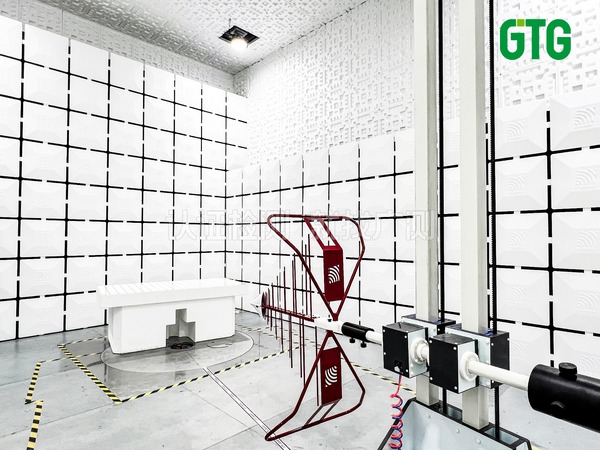
Understanding the CE Directive Framework for EV Chargers
The first step in EV charger CE certification is identifying which EU directives apply to a specific product configuration. The directive scope varies depending on charger type, power level, and integrated functionality — misclassification at this stage can lead to incomplete testing and regulatory non-compliance.
AC Charger Directive Mapping
AC electric vehicle chargers — including both wall-mounted and pedestal-type units — typically fall under the following directives:
- EMC Directive — Directive 2014/30/EU governs electromagnetic compatibility. AC chargers must comply with harmonized standards including EN 55014-1 (or EN 55011 for industrial environments) for emission limits and EN 55014-2 (or EN 61000-6-2) for immunity requirements. The applicable standard depends on whether the charger is classified for residential, commercial, or industrial use.
- Low Voltage Directive — Directive 2014/35/EU covers electrical safety for equipment operating within 50–1000 V AC and 75–1500 V DC. For EV chargers, the primary safety standard is EN 61851-1, which specifies general safety requirements for conductive charging systems.
- WEEE Directive — Directive 2012/19/EU requires compliance with waste electrical and electronic equipment recycling obligations, including product marking and registration in target market member states.
DC Fast Charger Considerations
DC fast chargers introduce additional complexity due to higher power levels and the presence of large power conversion modules. Beyond the directives listed above, DC chargers must also address EN 61851-23 for DC-specific safety requirements. The EMC testing regime for DC chargers is more demanding — EN 61851-21-2, the harmonized standard for EV charger EMC, specifies test configurations and limits that factor in the high-power operation of DC charging systems. Harmonic current emission testing per IEC 61000-3-2 becomes particularly critical for DC chargers due to the significant current draw from the grid.
Key consideration: Many modern EV chargers incorporate RFID readers, Wi-Fi modules, or cellular connectivity for smart charging management. Each wireless transmitter must be individually assessed under the Radio Equipment Directive (RED). A product integrating both an RFID reader (13.56 MHz) and a 4G LTE module may need separate testing and documentation for each radio function, in addition to the base EMC and LVD requirements. Early-stage regulatory planning should map every communication interface to its applicable directive.
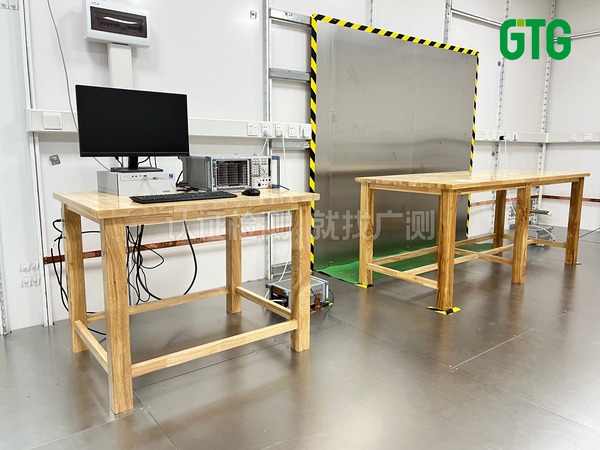
Core Testing Requirements Under CE Certification
CE certification testing for EV chargers spans both electromagnetic compatibility and electrical safety domains. The following sections detail the critical test categories and their applicable standards.
EMC Emission Testing
Conducted emissions (150 kHz–30 MHz) and radiated emissions (30 MHz–1 GHz, extendable to higher frequencies for internal clock sources above 108 MHz) form the core of EMC emission testing. EN 61851-21-2 specifies the measurement setup, operating modes, and limit values for EV charging equipment. Testing must be performed with the charger operating at representative load conditions — typically 50% to 80% of rated power — as this is the operating range where power electronics generate the highest electromagnetic noise.
Harmonic current emission testing per IEC 61000-3-2 and voltage fluctuation/flicker testing per IEC 61000-3-3 are required for AC chargers. These tests evaluate the charger's impact on the public low-voltage supply network. For three-phase chargers above 16 A per phase, the assessment may reference IEC 61000-3-12 for harmonic limits.
EMC Immunity Testing
EV chargers must demonstrate operational integrity under electromagnetic disturbances. Key immunity tests include electrostatic discharge (ESD) per IEC 61000-4-2 — particularly relevant for publicly accessible chargers with user interfaces; radiated radio-frequency immunity per IEC 61000-4-3; electrical fast transient/burst immunity per IEC 61000-4-4 on AC power ports; surge immunity per IEC 61000-4-5 for lightning-induced overvoltage protection; and conducted RF immunity per IEC 61000-4-6 on signal and power lines.
Electrical Safety Testing
Safety testing per EN 61851-1 and EN 61851-23 includes dielectric withstand (hipot) testing, insulation resistance measurement, protective earth continuity verification, touch current measurement, temperature rise testing under rated and overload conditions, and ingress protection testing. Outdoor-installed chargers typically require a minimum IP54 rating per EN 60529. Safety-critical components such as residual current devices, contactors, and insulation barriers must be individually verified against their applicable component standards.
Technical Documentation and Declaration of Conformity
The CE marking process places the responsibility for compliance on the manufacturer or the authorized representative established within the EU. A comprehensive technical file is the foundation of the conformity assessment and must be maintained for at least 10 years after the last unit is placed on the market.
Required Technical Documentation
- Product description including model numbers, variants, and intended use
- Design and manufacturing drawings — schematics, PCB layouts, component layouts
- Descriptions and explanations necessary for understanding those drawings
- List of harmonized standards applied, with test reports demonstrating compliance
- Risk assessment per the LVD requirements, including hazard identification and mitigation measures
- Critical component list with manufacturer, model, rating, and certification status
- User manual and installation instructions with safety warnings
- EU Declaration of Conformity signed by an authorized representative
Practical tip: The technical file should be structured so that a competent authority can readily assess compliance. A well-organized file demonstrates due diligence and significantly streamlines any future market surveillance inquiries. Many manufacturers underestimate the importance of documenting design decisions related to compliance — this documentation is essential evidence of conformity assessment.
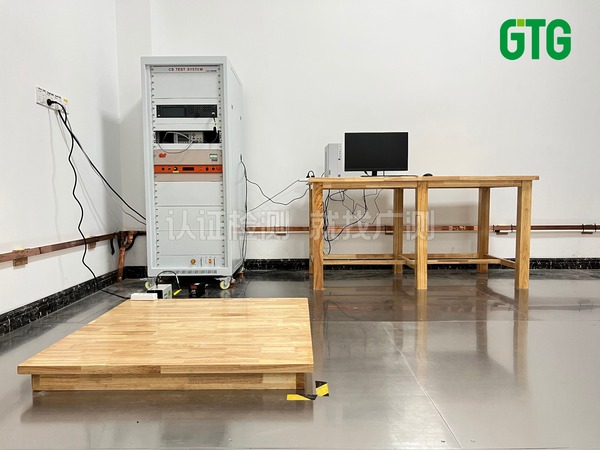
Multi-Market Certification Strategy for EV Charger Manufacturers
For EV charger manufacturers with global market ambitions, CE certification represents the entry point to European markets but rarely the endpoint. A coordinated multi-market certification strategy can reduce redundant testing, streamline documentation, and accelerate time-to-market across regions.
Europe: CE Plus National Deviations
Beyond base CE compliance, certain EU member states impose additional requirements. Germany may require GS certification for workplace-installed chargers. The UK now operates a separate UKCA regime post-Brexit, though CE-marked products continue to be accepted during the transitional recognition period. Scandinavian countries may require extended temperature range verification for outdoor installations. Manufacturers should evaluate per-country requirements early in the certification planning phase rather than treating each as an afterthought.
North America: UL and FCC Parallel Certification
The US market requires UL safety certification (UL 2594 for EV supply equipment, UL 2202 for DC charging systems) and FCC Part 15 EMC compliance. While UL and CE safety standards (EN 61851) share common technical roots in IEC 61851, the certification processes and national deviations differ. Planning CE and UL testing in parallel — rather than sequentially — can identify overlapping test requirements early, enabling consolidated sample preparation and streamlined test execution.
Asia-Pacific: Diversified Certification Landscape
China's CCC, South Korea's KC, and Japan's PSE certifications each follow independent technical standards. While harmonization with IEC standards is increasing — China's GB/T standards, for example, increasingly reference IEC 61851 — national deviations remain significant. A phased approach is recommended: complete CE certification to establish a global baseline, then address each APAC market in priority order based on commercial strategy. Where IEC-based test data exists from CE testing, it may support certain national certification applications through the IECEE CB Scheme. Engaging a certification partner with multi-market testing capability from the start helps avoid fragmented planning and duplicated effort.
Frequently Asked Questions
Q1 Does an EV charger with Wi-Fi require RED certification in addition to CE-EMC and CE-LVD?
Yes. Any wireless communication module integrated into an EV charger — including Wi-Fi, Bluetooth, RFID, and cellular — falls under the Radio Equipment Directive (2014/53/EU). Each radio function must be tested against the applicable harmonized standards (e.g., ETSI EN 300 328 for 2.4 GHz Wi-Fi/Bluetooth). The base EMC and LVD requirements continue to apply to the overall product. A single charger with multiple radio technologies requires consolidated RED compliance documentation.
Q2 Is a Notified Body always required for EV charger CE certification?
For EMC and LVD directives, manufacturers may use the self-declaration route (Module A — internal production control) without mandatory Notified Body involvement, provided they can demonstrate full compliance through in-house or third-party testing. However, if the charger incorporates radio equipment under RED and the harmonized standards are not fully applied, a Notified Body EU-type examination (Module B) becomes mandatory. Many manufacturers opt for voluntary third-party testing even under self-declaration to strengthen the credibility of their technical file.
Q3 What are the key differences between AC and DC charger CE testing scope?
DC chargers face a more extensive testing regime due to higher power levels and the presence of AC/DC power conversion modules. Key differences include: harmonic current testing under more stringent conditions (often exceeding the 16 A per phase threshold of IEC 61000-3-2, triggering IEC 61000-3-12), additional safety testing under EN 61851-23, more complex EMC measurement setups requiring high-power resistive or electronic loads, and extended temperature rise testing under maximum continuous output conditions. DC charger testing typically requires specialized laboratory infrastructure capable of handling high-power loads.
Q4 What factors determine the CE certification timeline for EV chargers?
The certification timeline depends on product complexity, number of applicable directives, readiness of technical documentation, and whether any non-compliance issues arise during testing that require design modifications and retesting. AC chargers with no wireless functionality generally proceed more quickly, while DC fast chargers with integrated radio modules involve additional testing iterations. Proactive pre-compliance testing during the development phase is an effective way to minimize retesting delays during formal certification.
Q5 Can CE test data support certification in other regions such as the Middle East or Southeast Asia?
In many cases, yes — with caveats. Countries with certification systems based on international IEC standards (IEC 61851 series for EV chargers) often accept IEC-based test reports through the IECEE CB Scheme. Since CE harmonized standards are derived from IEC standards, the test data generated for CE compliance can frequently be reused for CB Scheme applications. However, each destination country may impose national deviations — for example, Gulf Cooperation Council countries may require additional testing under extreme ambient temperature conditions. A certification partner with international certification expertise can advise on data reuse strategies and identify where supplementary testing is necessary.
This content is provided for industry communication and informational reference only and does not constitute any form of certification commitment, testing advice, or legal opinion. The certification requirements, procedures, and standards referenced herein may change as regulations evolve — please refer to the latest official announcements from the relevant authorities. Specific certification requirements, timelines, and costs must be evaluated by professional engineers based on the actual product. For inquiries, please contact us by phone.
Phone: +86 13925591357 | Email: net04@gtggroup.com | www.gtggroup.cn