

Contact information
Free service hotline
net04@gtggroup.com
TEL: 0769-85075888-6618
13925591357
Fax: 0769-85075898
Mail: net04@gtggroup.com
ADD: Huacan Industrial Park, No. 2 Keji 8th Road, Songshan Lake Park, Dongguan City, Guangdong Province
Monitor-TUV-Certification-Testing-Standards-and-Application-Process
TUV certification provides internationally recognized proof of safety compliance for monitors and display devices. This guide covers the TUV certification pathway for monitors, including applicable standards, key testing requirements, and practical strategies for efficient certification.
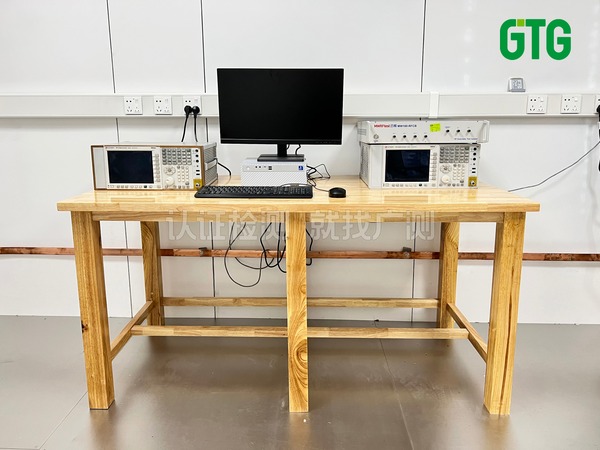
TUV Certification Overview for Monitors
TUV (Technischer Überwachungsverein) certification is a voluntary third-party safety certification widely recognized in European and global markets. For monitor manufacturers, TUV certification serves several purposes:
- Demonstrates compliance with European safety standards beyond the basic CE marking self-declaration
- Required by many European distributors and institutional buyers as a procurement condition
- TUV mark provides enhanced market credibility compared to self-declared CE compliance
Two main TUV organizations operate independently: TUV Rheinland and TUV SUD. Both issue internationally recognized certificates, but they maintain separate certification processes and marks.
Applicable Standards
Monitor TUV certification primarily addresses safety and ergonomic requirements:
EN 62368-1 Audio/video, information and communication technology equipment — Safety requirements
EN 60950-1 Legacy standard (still accepted for some existing product lines under transition provisions)
EN ISO 9241-307 Ergonomics of human-system interaction — Analysis and compliance test methods for electronic visual displays
CB scheme:TUV certificates can be based on IEC 62368-1 CB testing for international recognition
For monitors with ergonomic claims (eye comfort, flicker-free, low blue light), TUV Rheinland offers specialized certification programs that go beyond basic safety.
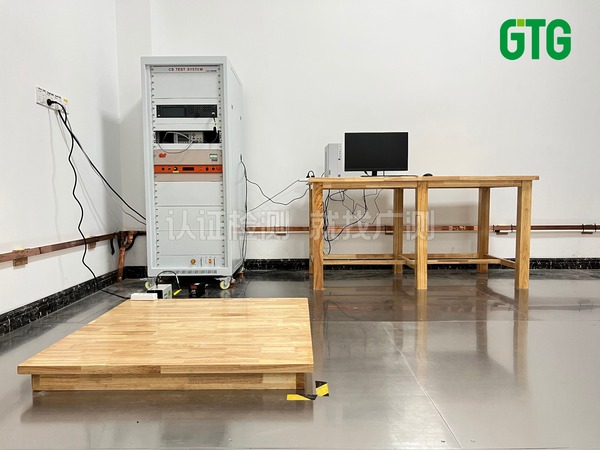
Key Safety Testing Requirements
Monitor safety testing under EN 62368-1 includes these critical evaluations:
- Energy source classification:Monitor internal power supply primary side classified as ES3 (hazardous energy), requiring reinforced insulation from accessible parts
- Insulation and clearance:Primary-secondary reinforced insulation, creepage and clearance distances per EN 62368-1 tables
- Temperature testing:Component and enclosure temperatures under normal and abnormal operating conditions
- Mechanical stability:Monitor stand and tilt mechanism stability, VESA mount strength verification
- Fire enclosure:Plastic enclosures must meet flame retardancy requirements (5V or V-0 depending on fire hazard assessment)
Practical Insight:During a TUV certification for a 32-inch 4K monitor with built-in speakers, the audio amplifier IC reached 112°C in the abnormal operation test (ventilation blocked), exceeding the Class B material rating of 105°C. The solution was to add a thermal pad connecting the IC heatsink to the metal back chassis, reducing the abnormal temperature to 98°C. For monitors with built-in audio, thermal management under blocked-ventilation conditions requires careful evaluation.
TUV Eye Comfort Certification
Beyond basic safety, TUV Rheinland's Eye Comfort certification has become a significant market differentiator for monitors. The certification evaluates:
- Flicker-free operation (PWM dimming frequency above critical threshold or DC dimming)
- Low blue light emission (spectral distribution measurement and weighted blue light intensity)
- Reflection management (anti-glare coating effectiveness)
- Image quality consistency (luminance uniformity, contrast ratio)
Eye Comfort certification can be conducted alongside the safety TUV certification, saving time and sample costs. GTG Group assists monitor manufacturers with both safety and eye comfort certification programs.
Certification Timeline and Multi-Market Strategy
Monitor TUV certification typically takes 6-10 weeks, including:
- Safety testing: 4-6 weeks
- Eye Comfort testing (if applicable): adds 2-3 weeks
- Factory inspection: 2-3 weeks (initial certification)
Strategic recommendation: Apply for TUV certification through the CB scheme, obtaining a CB report that can be used for multiple market conversions (UL for US, KC for Korea, PSE for Japan). This approach maximizes the return on testing investment.
This article is AI-assisted and for reference only. It does not constitute any certification commitment or legal advice. Please refer to the latest official regulations.
Contact: 13925591357 | net04@gtggroup.com