

Contact information
Free service hotline
net04@gtggroup.com
TEL: 0769-85075888-6618
13925591357
Fax: 0769-85075898
Mail: net04@gtggroup.com
ADD: Huacan Industrial Park, No. 2 Keji 8th Road, Songshan Lake Park, Dongguan City, Guangdong Province
Electronics Amazon Certification Requirements and Compliance Guide
When selling electronics on Amazon, regulatory compliance is not optional—it is a prerequisite for listing activation and continued sales. The specific certifications required depend heavily on the destination marketplace and the product's functional characteristics. This article outlines the key compliance requirements across major Amazon marketplaces and the practical path to achieving them.
Certification Landscape for Electronics on Amazon
United States (Amazon.com)
FCC (Federal Communications Commission) certification is the cornerstone of U.S. market compliance for electronics. Under 47 CFR Part 15, any device that intentionally or unintentionally radiates radio frequency energy must meet the applicable requirements:
- FCC SDoC (Supplier's Declaration of Conformity) — applicable to standard electronic devices such as chargers and adapters; self-declaration by the supplier without requiring an FCC ID
- FCC ID certification — mandatory for devices with wireless functionality (Wi-Fi, Bluetooth, Zigbee, etc.); requires testing at an accredited lab and grant of an FCC ID through a TCB (Telecommunications Certification Body)
Additionally, battery-powered products typically require compliance with UL 2054 or UL 62133 safety standards, and lithium battery shipments must satisfy UN 38.3 testing, which covers eight distinct safety assessments including altitude simulation, thermal testing, vibration, shock, external short circuit, overcharge, and forced discharge.
European Union (Amazon.de, Amazon.co.uk, Amazon.fr, etc.)
The EU market requires CE marking (Conformité Européenne) for electronic and electrical products. A typical electronic device must simultaneously satisfy multiple directives:
- EMC Directive 2014/30/EU — electromagnetic compatibility, ensuring the device does not emit excessive electromagnetic disturbance and possesses adequate immunity
- LVD Directive 2014/35/EU — low voltage safety, applicable to electrical equipment operating at AC 50–1000 V or DC 75–1500 V
- RED Directive 2014/53/EU — Radio Equipment Directive, mandatory for products with wireless functionality
- RoHS Directive 2011/65/EU — restriction of hazardous substances, controlling ten substances including lead, mercury, and cadmium
- WEEE Directive 2012/19/EU — waste electrical and electronic equipment recycling registration
For the UK market post-Brexit, UKCA marking (UK Conformity Assessed) is required. Its technical requirements largely mirror CE, but the mark must be applied separately.
Japan (Amazon.co.jp)
Japan requires PSE certification (Product Safety Electrical Appliance & Material) under the Electrical Appliance and Material Safety Law (DENAN). Category A specified electrical products require certification from a Japanese government-recognized third-party body, while Category B non-specified products allow supplier self-declaration. Wireless-enabled products additionally require TELEC certification (Technical Certification Mark) under the Radio Law Article 38.
Step-by-Step Certification Workflow
Regardless of the destination market, the certification process follows a broadly similar structure. The following outlines the end-to-end workflow using FCC ID certification for a U.S.-bound wireless device as the example:
- ①Determine the applicable certification pathway — classify the product by function (wireless module type, operating frequency, power level) to identify whether FCC SDoC or FCC ID applies
- ②Prepare technical documentation — including circuit schematics, BOM (bill of materials), user manual, block diagram, and antenna specifications
- ③Submit production-level samples — samples should reflect the final manufacturing configuration to ensure test results are representative of the shipped product
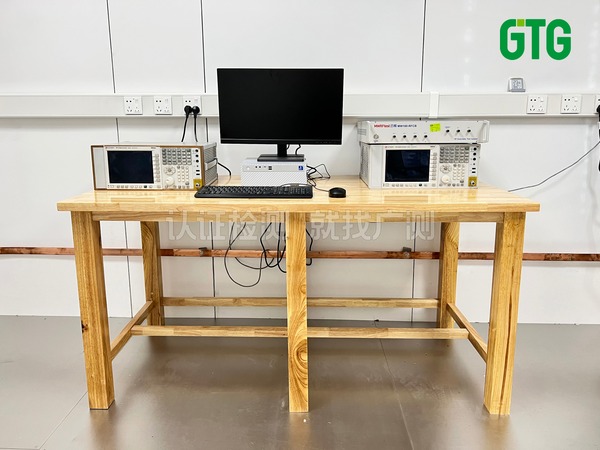
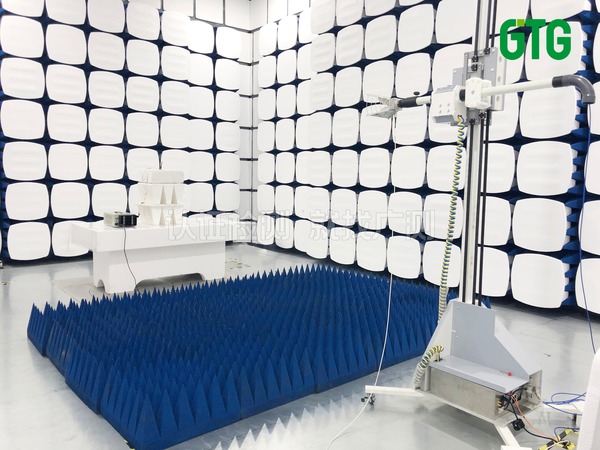
- ④Laboratory testing — radiated emissions, conducted emissions, spurious emissions, and other applicable tests per 47 CFR Part 15
- ⑤Test report issuance — if compliant, the laboratory issues the formal report; for FCC ID, the report must be submitted to a TCB for review and grant
- ⑥Declaration of conformity — the importer signs the DoC for SDoC; for FCC ID, the grant is obtained and the FCC ID is marked on the device and product documentation
- ⑦Upload to Amazon Seller Central — submit the test report and declaration in the compliance documentation section and await approval
Practical Insight:In a Bluetooth headphones FCC ID project, the radiated emission test data deviated from expectations because the firmware version on the sample did not match the production firmware. The laboratory required a re-submission. Always confirm that the firmware version number on the sample matches the mass-production version and keep version records for reference.
Typical Timeline and Determining Factors
Certification timelines vary based on the type of certification, product complexity, and completeness of the technical documentation. Common ranges are:
- FCC SDoC — 1 to 2 weeks, provided samples pass testing on the first attempt and documentation is complete
- FCC ID — 3 to 6 weeks, including TCB review time; products with multiple wireless modules typically require a longer timeline
- CE marking — 2 to 4 weeks for standard electronic products; the RED pathway adds an additional 1 to 2 weeks
- PSE certification — 2 to 4 weeks for Category B; 4 to 8 weeks for Category A (third-party body involvement required)
Key timeline determinants include whether samples pass on the first test cycle, the completeness of technical documentation, and the certification body's scheduling. Thorough upfront preparation is the most effective strategy to avoid rework delays caused by non-compliant samples or missing documentation.
Frequently Asked Questions
Q1 Can electronics be listed on Amazon.com without FCC certification?
No. FCC certification is a mandatory requirement for electronic products in the U.S. market. Amazon routinely scans product listings for compliance. Listings lacking the required FCC documentation may be removed, and existing inventory may be subject to forced disposal.
Q2 A Bluetooth speaker is planned for listing on both Amazon.com and Amazon.de. Is separate certification required?
Yes. FCC and CE are independent compliance frameworks with different test standards, report formats, and certification workflows. A Bluetooth speaker requires FCC ID for Amazon.com and must satisfy the RED Directive plus EMC and LVD requirements with CE marking for Amazon.de. However, certain test items—such as RF performance testing—may be leveraged across both certifications, reducing the overall timeline and cost.
Q3 Does Amazon impose an expiration period on test reports?
Amazon does not typically define an explicit validity period for test reports. However, if the product undergoes a design change, a relevant standard is revised, or applicable regulations are updated, the existing report may become invalid. It is advisable to refresh testing whenever the design changes or standards are revised to maintain ongoing compliance.
Choosing a Certification Partner
When evaluating a certification service provider, consider the following dimensions:
- Accreditation scope — verify that the laboratory holds the necessary accreditations for the applicable standards, such as FCC-recognized test sites and EU Notified Bodies
- Service breadth — assess whether the provider can deliver multi-country certification under one roof, reducing the complexity of coordinating across multiple entities
- Industry experience — evaluate familiarity with the electronics product category and the ability to provide proactive compliance planning advice from the outset
GTG Testing Group specializes in testing and certification services for electronic and electrical products. We provide one-stop multi-country certification solutions—including FCC, CE, and PSE—from initial compliance assessment through to final report issuance.
This article was AI-assisted. The information provided is for reference only and does not constitute any certification commitment or legal advice. Please refer to the latest official regulations for authoritative guidance.
Contact:net04@gtggroup.com