

Contact information
Free service hotline
net04@gtggroup.com
TEL: 0769-85075888-6618
13925591357
Fax: 0769-85075898
Mail: net04@gtggroup.com
ADD: Huacan Industrial Park, No. 2 Keji 8th Road, Songshan Lake Park, Dongguan City, Guangdong Province
SRRC Certification
SRRC Certification is the mandatory Type Approval certification for radio transmission equipment implemented by the Ministry of Industry and Information Technology of the People's Republic of China. Since June 1, 1999, all radio component products sold or used within China must obtain SRRC approval certification. Products without SRRC certification face penalties including product removal from the market and fines. This certification is an essential market access requirement for products entering the Chinese market.
1. What is SRRC Certification
SRRC Certification (SRMC Certification), formally known as "Radio Transmission Equipment Type Approval Certification," is a mandatory certification system established by the State Radio Regulation Committee. This certification is administered by the Radio Management Bureau of the Ministry of Industry and Information Technology (MIIT) and applies to electronic products with wireless, Bluetooth, or transmission frequency functions.
According to the "Radio Regulations of the People's Republic of China," all radio transmission equipment exported to or produced in China must undergo SRRC certification and display the radio transmission equipment type approval code. Each radio transmission equipment model is issued a unique "Radio Transmission Equipment Type Approval Certificate" and approval code (CMIIT ID). If a product undergoes changes in performance or main technical parameters, it must undergo SRRC recertification.
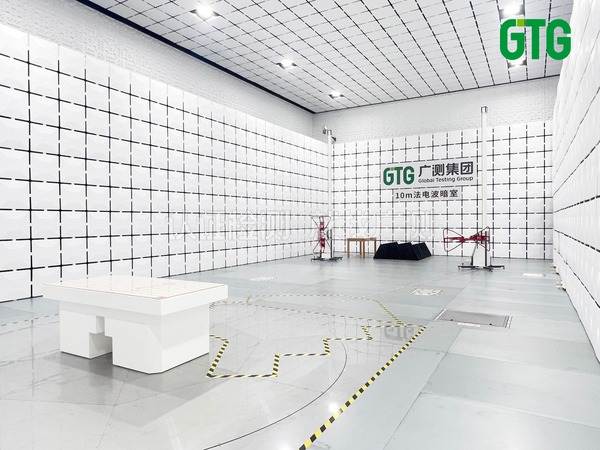
2. Product Scope for SRRC Certification
SRRC Certification covers all products with radio transmission functions, including but not limited to:
- Mobile Communication Devices – Mobile phones, tablets, wireless POS machines, mobile Wi-Fi hotspots, etc.
- Short-Range Wireless Devices – Bluetooth speakers, Bluetooth earphones, TWS earbuds, wireless keyboards and mice, smartwatches, etc.
- Smart Home Devices – Smart door locks, smart cameras, smart speakers, smart lighting, air conditioner remote controls, etc.
- In-Vehicle Wireless Devices – Car navigation, dashcars, car Bluetooth, car Wi-Fi, ETC on-board units, etc.
- IoT Devices – NB-IoT modules, LoRa modules, ZigBee modules, wireless sensors, smart wearables, etc.
- Wireless Audio/Video Devices – Wireless microphones, wireless earphones, wireless speakers, UAV video transmission modules, etc.
Important Notice: Any product with wireless transmission functionality (Bluetooth, Wi-Fi, 2G/3G/4G/5G, RFID, NFC, etc.) must complete SRRC certification before being sold in the Chinese market. This SRRC certification, known in the industry as the "Radio Frequency ID," is a mandatory market access permit for products to be legally sold in the domestic market. There are no shortcuts.
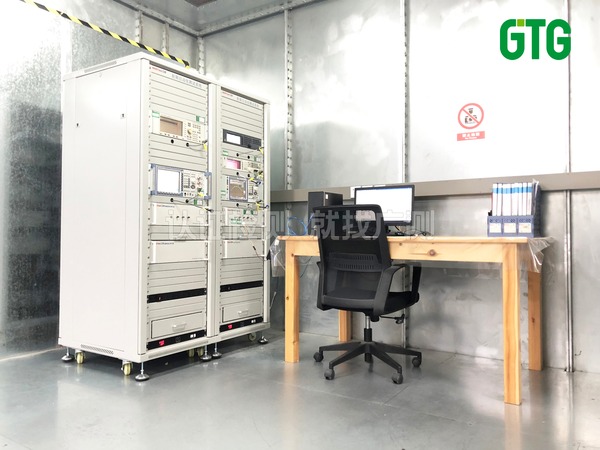
3. SRRC Certification Testing Items
SRRC certification testing is conducted by designated national laboratories according to relevant radio management requirements. Main testing items include:
3.1 Transmit Power Test
Verifies whether the device's transmit power meets national limit requirements. Different frequency bands and product types have different power limit standards. Exceeding limits may cause interference with other radio devices or violate spectrum management regulations. Testing must cover all operating frequency bands supported by the device.
3.2 Frequency Tolerance Test
Tests the stability and accuracy of the device's operating frequency, ensuring the transmit frequency is within the specified range. Frequency tolerance refers to the maximum allowable deviation between actual transmit frequency and nominal frequency. Exceeding tolerance may cause frequency interference with other users.
3.3 Bandwidth Test
Verifies whether the device's transmit bandwidth meets relevant standard requirements. Excessive bandwidth may occupy too much spectrum resources, reducing spectrum utilization efficiency; insufficient bandwidth may affect data transmission efficiency.
3.4 Spurious Emission Test
Tests for any undesired emissions generated outside the operating frequency band. Spurious emissions include harmonic emissions, intermodulation products, parasitic emissions, etc. These undesired emissions may interfere with other radio services and must be controlled within specified limits.
3.5 Modulation Characteristics Test
Verifies whether the device's modulation method, modulation depth, modulation accuracy, etc., meet standard requirements. Correct modulation characteristics are the foundation for ensuring communication quality. Different communication systems have different modulation requirements.
3.6 Power Spectral Density Test
Measures the device's energy distribution characteristics in the frequency domain, ensuring the transmitted signal does not produce excessive spectrum spread. Power spectral density testing is particularly important for digitally modulated devices, requiring out-of-band emissions to meet spectrum mask requirements.
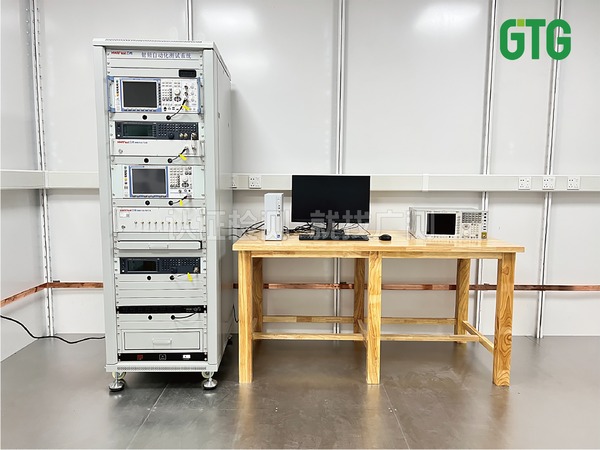
4. SRRC Certification Process
The SRRC certification process is divided into the following main steps:
- ①Pre-Application Preparation – Confirm whether the product falls within SRRC certification scope, prepare technical documentation including product technical specifications, circuit diagrams, block diagrams, BOM lists, and product photos.
- ②Submit Application Materials – Submit certification application to the MIIT Radio Management Bureau, including application form, product technical materials, and business license.
- ③Product Testing – Send samples to designated national laboratories for testing. Laboratories conduct comprehensive testing according to relevant standards and issue test reports.
- ④Documentation Review – After the laboratory submits the test report, MIIT reviews the technical materials and test report.
- ⑤Certificate Issuance – After passing review, the MIIT Radio Management Bureau issues the "Radio Transmission Equipment Type Approval Certificate" and approval code (CMIIT ID).
Timeline Note: SRRC certification typically takes 8-12 weeks. Specific time depends on product type, testing complexity, and documentation preparation status. Products requiring rectification after test failures will have extended timelines. Companies are advised to plan for certification well in advance.
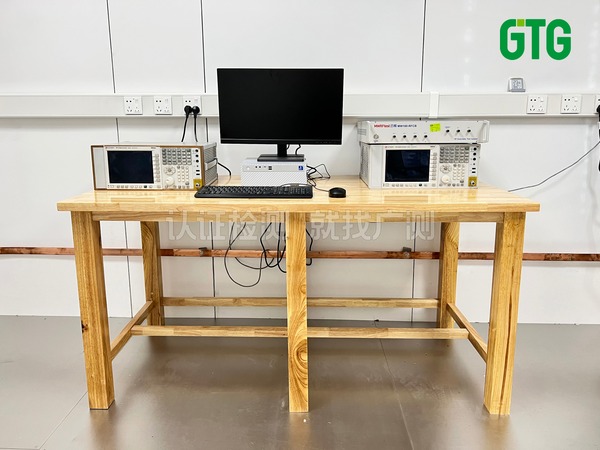
5. Certificate Management and Maintenance
Certificate Validity: SRRC approval certificates are valid for 5 years. Companies must submit extension applications before the validity period expires. After obtaining the certificate, companies can affix the certification mark on products, indicating compliance with national radio management regulations.
Change Declaration: If product performance or main technical parameters change (such as transmit frequency, power, modulation method changes), SRRC recertification is required. Minor appearance changes or changes that do not affect RF characteristics may not require recertification, but confirmation from the competent authority is needed.
Market Supervision: Products that have obtained SRRC certification are still subject to supervision and inspection by radio management departments after being sold in the market. If products are found to be non-compliant with the approved model or have quality issues, penalties such as certificate revocation or product recall may be imposed.
6. Frequently Asked Questions and Precautions
Q1: What are the consequences of not having SRRC certification?
When listing wireless products for sale on major e-commerce platforms, SRRC certificates (CMIIT ID) must be uploaded. Products without certificates will be barred from listing. More importantly, privately selling unapproved radio transmission equipment is illegal. Once discovered, products will be forcibly removed from the market and face substantial fines. More severe penalties may apply in serious cases.
Q2: Can SRRC certification be handled through an agent?
Yes. Companies can entrust qualified agencies to handle SRRC certification. Agencies familiar with process requirements can help prepare technical materials, coordinate laboratory testing, and track review progress, improving certification efficiency. However, the applicant must still be the actual manufacturing company.
Q3: Does each model in a product series require certification?
Yes. Each radio transmission equipment model is issued a unique approval code. If series products have differences in core technical parameters such as transmit frequency, power, or chip solutions, each must undergo separate certification. Identical products can be applied for as series models.
Q4: What is the difference between SRRC certification and CCC certification?
SRRC certification is Type Approval for radio transmission equipment, focusing on RF performance, transmit power, frequency tolerance, and other technical parameters. CCC certification is mandatory product certification for electrical safety and electromagnetic compatibility. They are different types of certification. Some products may require both SRRC and CCC certification to be sold in China.

7. Summary and Recommendations
SRRC certification is the statutory market access threshold for radio transmission equipment entering the Chinese market and a necessary condition for products to be legally sold domestically. With stricter e-commerce platform supervision and more rigorous enforcement of radio management regulations, products without SRRC certification will face increasing market risks and legal liabilities.
For companies planning to sell wireless products in the Chinese market, recommendations include: Confirm early whether products fall within SRRC certification scope and plan certification timeline in advance; Choose professional laboratories and agencies with qualifications to effectively improve certification efficiency; Ensure product design meets national radio management requirements to avoid test failures due to design flaws; Monitor product changes during certificate validity period and handle change or recertification procedures in a timely manner.
Although SRRC certification involves a certain timeline and cost, it is an essential "passport" for products entering the Chinese market. Through compliant certification, companies can not only avoid legal risks and market penalties but also enhance product competitiveness, laying a solid foundation for development in the Chinese market.
This article is AI-assisted generated for reference only and does not constitute any certification commitments or legal advice. Please refer to the latest official regulations for specific requirements.
Email: net04@gtggroup.com
Website: https://www.gtggroup.cn