

Contact information
Free service hotline
net04@gtggroup.com
TEL: 0769-85075888-6618
13925591357
Fax: 0769-85075898
Mail: net04@gtggroup.com
ADD: Huacan Industrial Park, No. 2 Keji 8th Road, Songshan Lake Park, Dongguan City, Guangdong Province
Complete Guide to SRRC Certification for Wireless Products
Key takeaway: SRRC certification (Type Approval for Radio Transmission Equipment) is a mandatory market access requirement in China for all wireless devices, enforced by the Ministry of Industry and Information Technology (MIIT). The standard process – from document preparation and sample testing to approval – typically takes 8 to 14 weeks. Major factors affecting the timeline include pre-compliance testing results and the completeness of technical files.
Based on hands-on experience, this guide walks you through step-by-step application procedures, required documents, test items, common pitfalls, and timeline control strategies for a smooth SRRC approval.
1. What is SRRC Certification and Which Products Require It?
SRRC (State Radio Regulation Committee) certification, officially known as “Type Approval for Radio Transmission Equipment”, is established under the Regulations of the People’s Republic of China on Radio Management and the Measures for the Management of Type Approval of Radio Transmission Equipment (MIIT Order No. 45). Any radio transmission equipment manufactured, imported, sold, or used in public activities within China must obtain this approval and display a CMIIT ID on the device.
Typical applicable products: Bluetooth devices, Wi-Fi routers, 2G/3G/4G/5G terminals, drones, wireless microphones, RFID readers, smart home wireless modules, walkie-talkies, automotive radars, etc. Any product that includes a radio transmission function (and is not on the micro-power short-distance exemption list) requires SRRC certification.
Hands-on tip: In a recent Bluetooth headset project, the company wrongly assumed “Bluetooth power <10mW is exempt from SRRC”, which led to product delisting and fines. Unless your device falls under the explicit exemption list, you must complete SRRC – no exceptions.
2. Step-by-Step SRRC Application Process
The official type approval procedure follows strict rules – there are no “special fast tracks”. However, thorough preparation can prevent costly rework. Below is the standard workflow:
- 1 Document preparation: Fill out the SRRC application form, prepare product technical description, circuit diagrams, block diagram, user manual, and critical components list.
- 2 Sample and pre-compliance testing: Submit 3–5 samples according to MIIT’s technical requirements. Pre-test key parameters such as transmit power, frequency tolerance, occupied bandwidth, and spurious emissions.
- 3 Online application submission: Submit digital documents via the MIIT e-government platform or through an authorized testing agent. An application number will be issued.
- 4 Laboratory testing and review: Qualified national labs perform full tests and issue a report. If any item fails, the applicant must rectify and re-submit samples, which resets the testing timeline.
- 5 Certificate and labeling: Upon approval, the SRRC certificate (valid for 5 years) is issued. The product must display the CMIIT ID before being placed on the market.
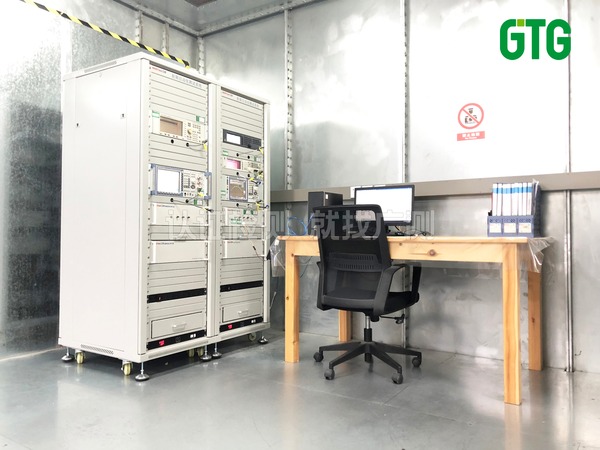
For a detailed project plan, consult a professional agency. GTG provides full technical support and pre-compliance testing services to help shorten test cycles.
3. Mandatory Document Checklist
- Completed SRRC application form (stamped scanned copy)
- Business license of the applicant (with unified social credit code)
- Product technical specification (frequency range, transmit power, modulation, occupied bandwidth, etc.)
- Circuit schematic, block diagram, and PCB layout
- List of critical RF components (antenna, PA, filter models/specifications)
- Product label drawing showing the CMIIT ID location
- Power of attorney (if applying through a representative)
Watch out: Over 30% of recent rejections were due to missing antenna gain documentation or lack of transmit power declaration in the user manual. Use a third-party technical pre-review to avoid such delays. Request GTG’s standard document templates to reduce the chance of RFI/RFE.
4. Key Test Items and Applicable Standards
SRRC testing strictly follows China’s national radio regulations. Primary references include the Technical Requirements for Micro‑power Short‑range Radio Transmission Equipment and the General Technical Requirements for Radio Transmission Equipment Parameters. Major test items:
- Frequency tolerance – Maximum allowable deviation between actual and rated frequency; typically ≤20 ppm for Bluetooth/Wi-Fi.
- Occupied bandwidth – 26 dB bandwidth must comply with limits for each communication standard.
- Transmit power (EIRP) – Example: indoor 2.4 GHz Wi-Fi ≤100 mW; 5.8 GHz point-to-point ≤500 mW.
- Spurious emissions / out‑of‑band emissions – Typically ≤ -36 dBm/100 kHz to protect adjacent bands.
- Receiver blocking/intermodulation (for complex radio systems).
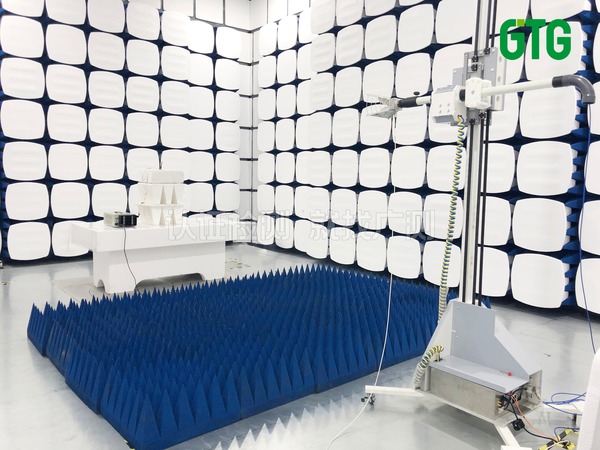
As per MIIT Notice No. 33 (2021), tests must be conducted on production‑intent samples (not engineering firmware). Over the past year, more than 25% of first‑time submissions failed due to excessive power. GTG’s pre‑compliance testing can identify and fix over 90% of common failures upfront.
5. SRRC Certification Timeline: Realistic Expectations & Key Drivers
There is no “fixed‑day guarantee”, but a typical SRRC project ranges from 8 to 14 weeks. The variance is driven by the following factors:
- Pre‑compliance readiness: Without pre‑testing, a single failure can add 3–6 weeks for rectification and retesting. With proper pre‑testing, the total timeline can be reduced to ≤10 weeks.
- Document completeness and lab schedule: Missing documents cause correction loops (1–2 weeks). Peak season (Q3) lab queues may add 2–4 weeks.
- Product complexity: A simple Bluetooth module vs. a 5G + Wi‑Fi 6 combo device – test items can differ by a factor of 3.
Real‑world data: Based on 20 recent wireless module projects, clients who used GTG’s document coaching + pre‑compliance testing achieved an average cycle of 9.5 weeks, while those applying independently without technical support took more than 13 weeks.
6. Frequently Asked Questions (FAQs)
Q1: Is SRRC the same as CTA (network access)?
No. SRRC focuses on radio transmission compliance (RF parameters). CTA network access approval is for telecom equipment connecting to public networks. Mobile phones require both SRRC and CTA; typical Wi‑Fi/Bluetooth devices need only SRRC.
Q2: How much does SRRC certification cost? Can you give a specific number?
Costs vary by product type (Bluetooth, 4G, 5G, mmWave), test items, and whether additional engineering support is needed. Accredited labs follow NDRC fee guidelines. For an accurate estimate, please provide your product specifications to a professional service provider.
Q3: Can overseas manufacturers apply for SRRC?
Yes. The overseas manufacturer must authorize a locally registered agent in China to submit the application, along with factory quality system documents and a letter of authorization. The testing process is identical.
Q4: How long is the certificate valid? Renewal process?
SRRC certificate validity is 5 years. Apply for renewal up to 3 months before expiry. If no changes in product design or RF parameters, a simple application with a declaration of no change will extend validity for another 5 years.
7. How to Choose a Reliable SRRC Certification Partner
Avoid providers who promise “guaranteed pass” or “ultra‑fast issuance”. A legitimate partner will not guarantee results but can significantly reduce risk through technical expertise. Look for three qualities:
- ① Access to accredited lab pre‑testing resources for preliminary evaluation.
- ② Proven track record with 200+ successful product categories and full documentation support.
- ③ Transparent pricing based on actual test items, no “fast‑track” sales pitch.
GTG has helped over 200 companies obtain or renew SRRC certificates across IoT modules, broadband wireless devices, and short‑range equipment. Schedule a one‑on‑one SRRC technical consultation to get a roadmap tailored to your product.
This content is AI‑assisted and for general informational purposes only. It does not constitute certification commitment or legal advice. Always refer to official regulations.
Email: net04@gtggroup.com